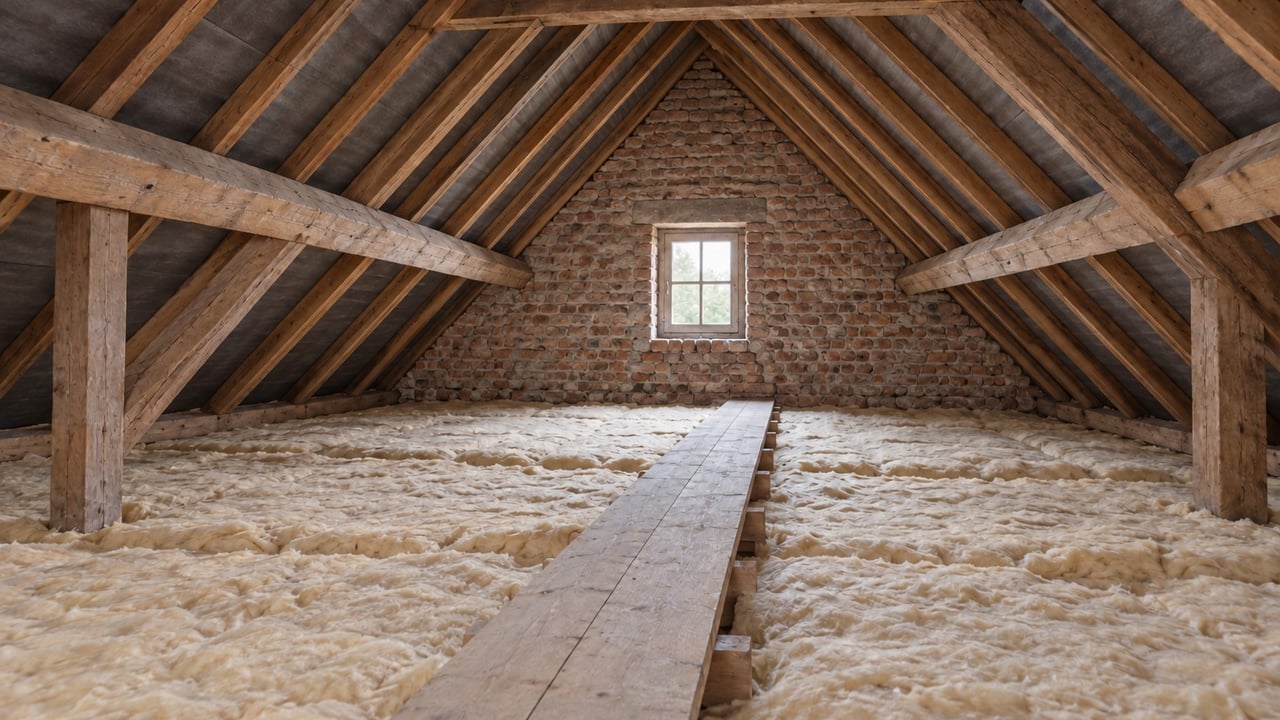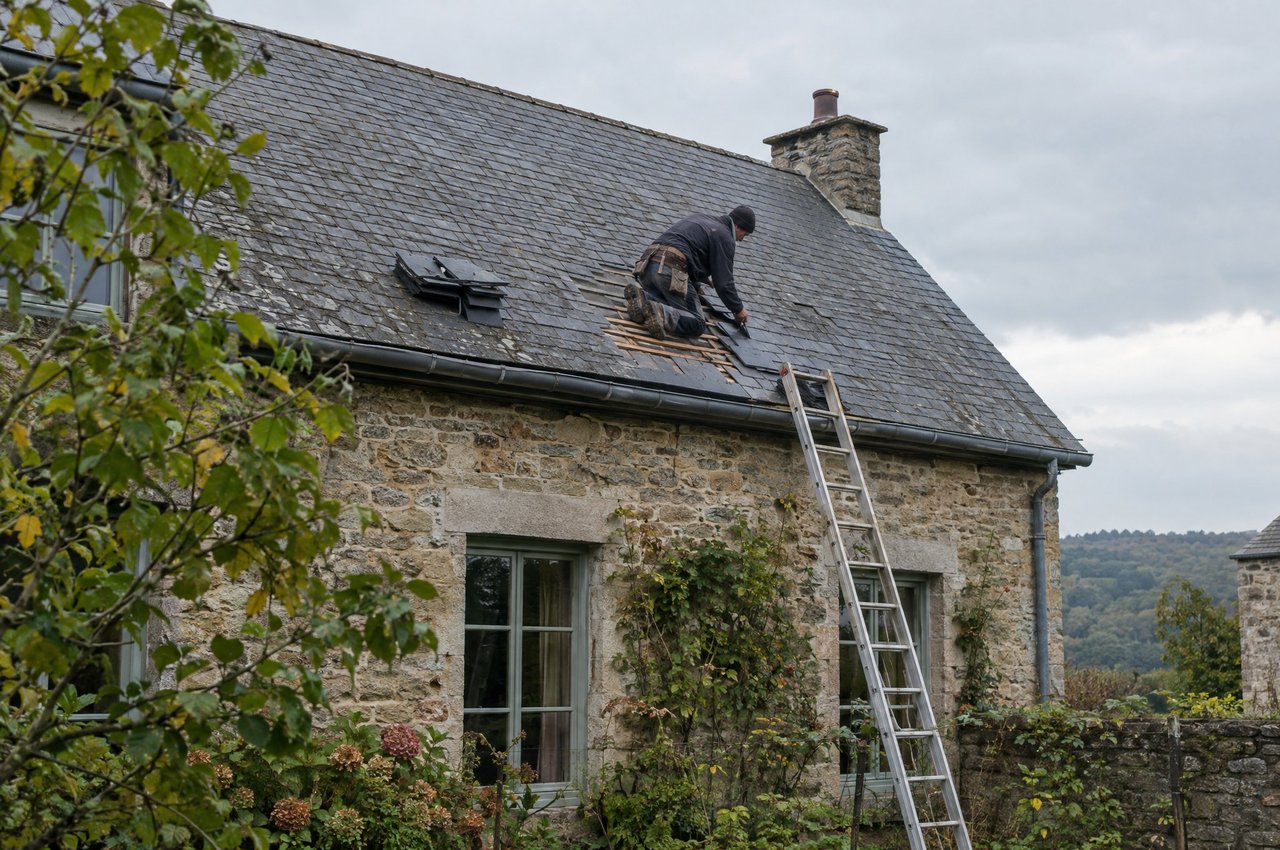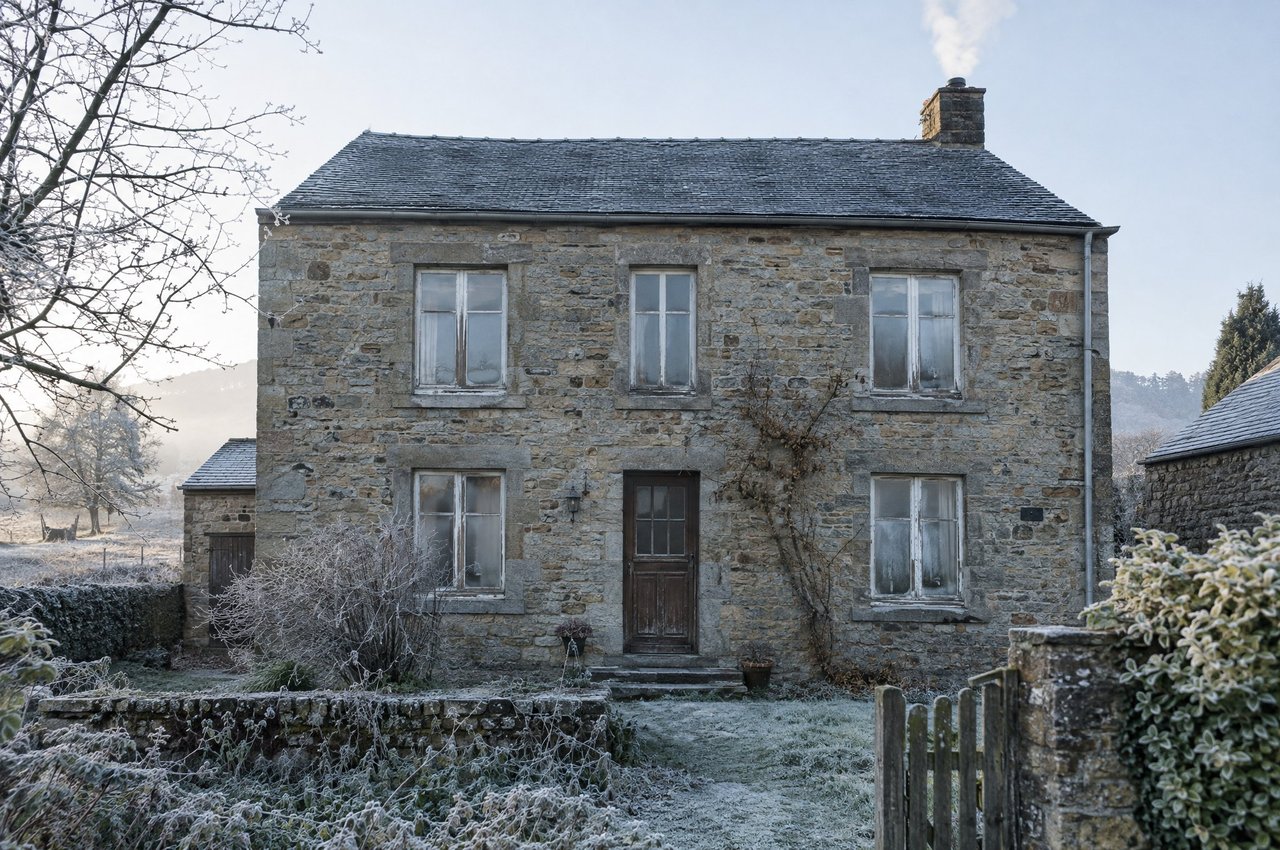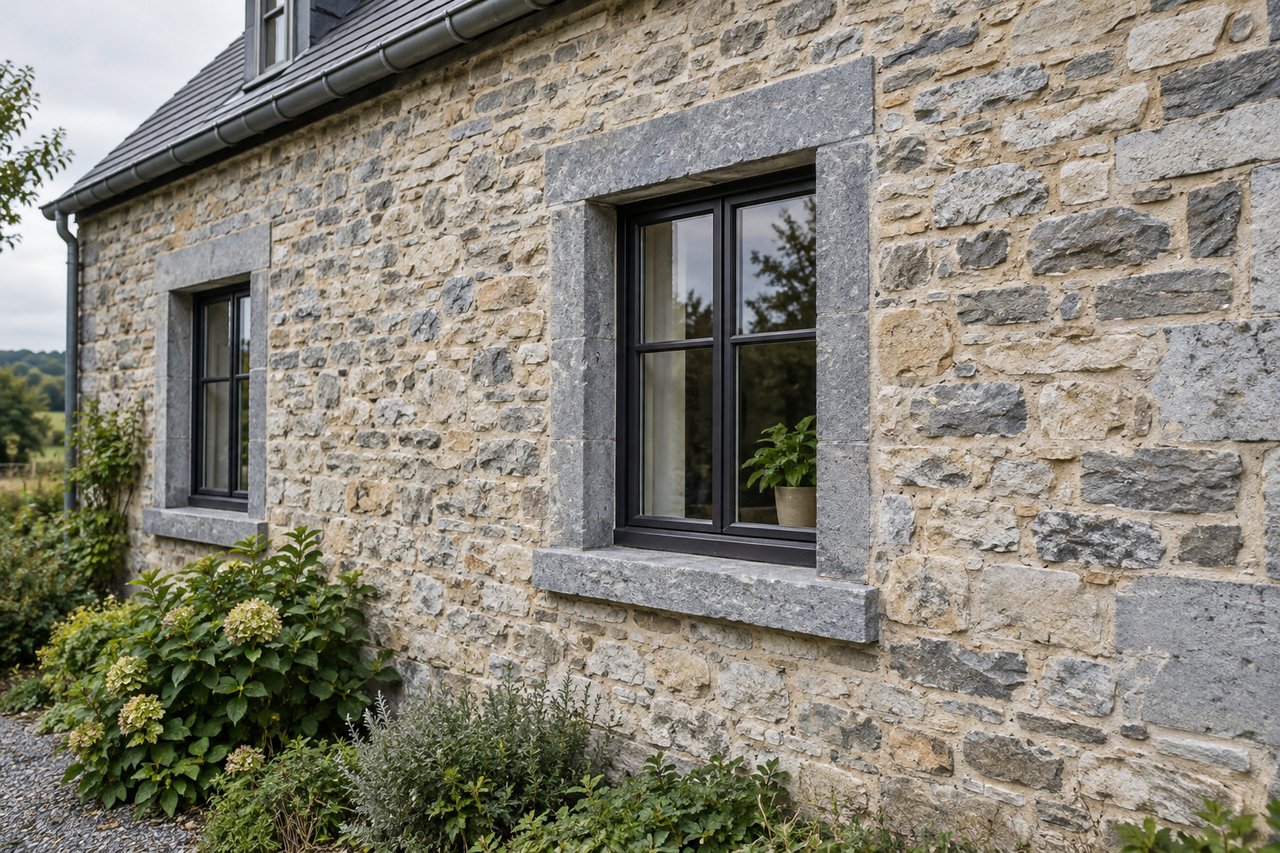
Before insulating a stone house, have its masonry, exposure to rain and drying potential examined. Then compare solutions compatible with the building and the appearance you want to preserve. A material described as "breathable" does not replace this assessment: the entire system must suit the wall.
Why examine the wall before choosing insulation?
An exposed stone façade can contribute to the character of a house in the Province of Liège. Preserving it does not, however, demonstrate that internal insulation is suitable. The actual wall construction, joints, renders and repairs must form part of the assessment.
The Buildwise presentation on preliminary assessment for internal insulation, published in 2026, describes checks covering existing moisture, driving rain, frost and the effect of finishes on drying. It also draws attention to elements embedded in the masonry, including timber beams and metal pipes. These points provide a framework for assessment, not a remote endorsement of your façade.
Prepare for this assessment with the available records: construction photographs, known repairs and previous episodes of damp. Ask the professional to identify the causes to address and the checks still needed. Have the assessment and remedial work priced separately in a quotation: the appearance of the stone alone cannot provide a sound budget.
Should you insulate internally or externally?
Ask for both options to be compared where they are feasible. What happens to your house's façade? How much room does the system occupy inside? Which junctions need altering? Which local constraints need checking? The comparison should cover a complete project, not just the price of the insulation material.
An important limit to the guidance must be understood: Buildwise's NIT 300 on internal insulation, published in 2026, covers brick and concrete façades. Natural stone façades are outside its direct scope, and it states that certain principles can be applied to them following a detailed study. A detail intended for brick is therefore not an approved installation method for your stonework.
Is "breathable" insulation enough to protect the wall?
No. The Buildwise presentation on system types distinguishes, among others, systems closed to vapour diffusion and open hygroscopic systems, with different drying potential. This distinction does not identify a universal material for every type of masonry.
Ask for a description of the full build-up: substrate preparation, insulation, fixing, finishes, and air and vapour management. The designer must justify their compatibility with the house assessed. If that justification is missing, have the study and its quotation completed before ordering installation.
Which junctions and ventilation need planning?
In its presentation on sizing and construction details, Buildwise highlights contact between insulation and wall, window reveals, junctions and continuity of airtightness. For a stone house, ask how these principles will be adapted following the building assessment.
The Buildwise guidance on ventilation in renovation recommends an overall design from the start of the project. Have walls, windows and air renewal coordinated rather than choosing these interventions separately.
Before signing, ask for written answers on the following points:
- the areas of masonry examined and those still requiring checks;
- the causes of moisture and the remedial measures planned;
- the justification for the system in relation to the stone concerned;
- details at windows, floors and embedded elements;
- coordination of ventilation and other work;
- the cost of assessment, remedial work and installation, with their limitations.
Keep the findings, the justified choices and the construction details. They will help explain the work beyond its visible finish.
What are the answers to frequently asked questions?
Can the stone remain exposed outside?
This is an objective to investigate, not a guarantee of feasibility. Ask for a comparison of the options and a technical justification for the one that preserves the façade, with a detailed cost breakdown.
Can you use an insulation detail intended for brick?
Not as a solution already validated for stone. The stated scope of NIT 300 requires a distinction between direct recommendations and principles to be investigated for other masonry.
Should you choose the insulation before the assessment?
No. Start by understanding the wall and the remedial measures needed. System selection, junctions and ventilation then follow as part of a coordinated design.
If you are also considering selling, our guide to renovating or selling as it stands helps frame the property question, without guaranteeing a financial return on the work. Request your valuation report to put your project in context. Insulation design remains a matter for the competent professional who will examine the house.