# Selling a house with a converted annexe in Wallonia
Before presenting an annexe as living space or a self-contained dwelling, compare its current condition with the plans and permissions. A furnished room shows a use, not authorisation for it. A missing document does not prove a breach either: first reconstruct the file, then have any discrepancies assessed before making a commitment to sell.
## Which works need a precise description?
An extension, an altered opening and the creation of a dwelling raise different questions. The CoDT (Wallonia's Territorial Development Code) requires permission notably for alterations affecting load-bearing structures, the built volume or the architectural appearance, and for the creation of a new dwelling. Exemptions exist for certain operations and works: the word 'conversion' alone does not establish the position. [Sources: CoDT, D.IV.4](https://wallex.wallonie.be/eli/loi-decret/2016/07/20/2016205561/2026/04/01) and [SPW, applying for planning permission](https://www.wallonie.be/fr/demarches/demander-un-permis-durbanisme).
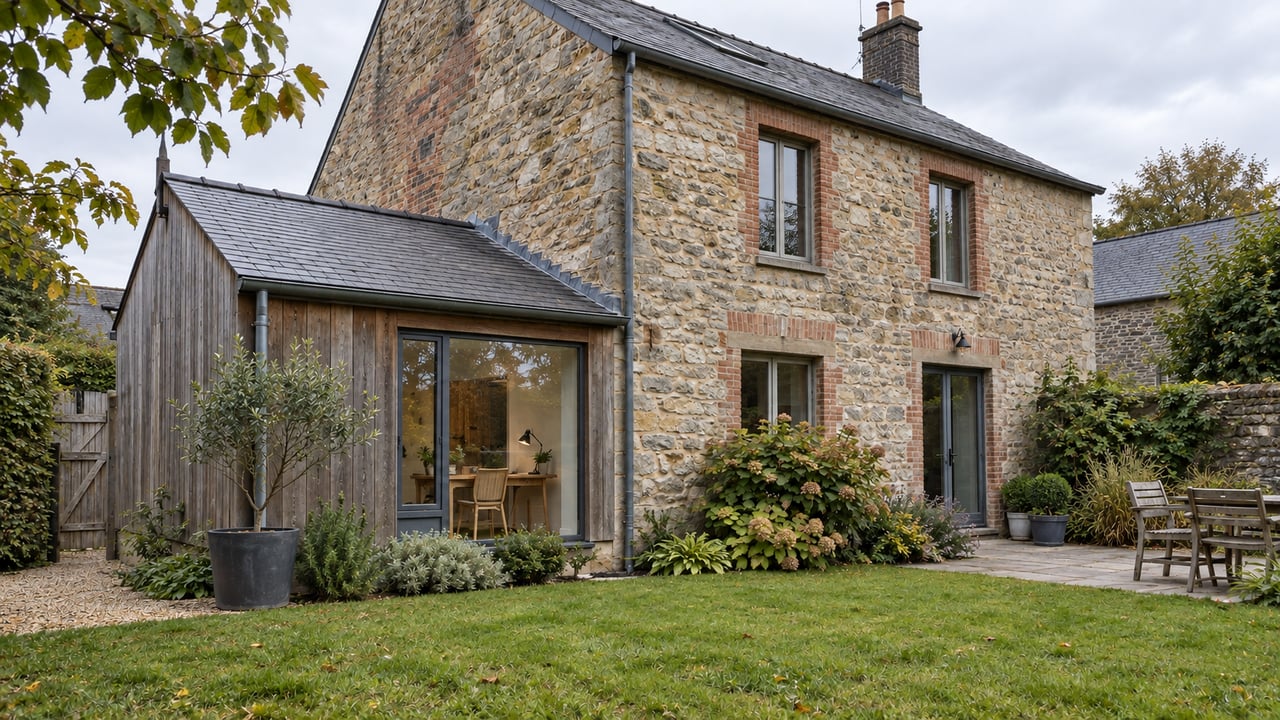
Record visible alterations, their use and documented dates. A garage converted into an office with glazing replacing its door calls for a specific question about those works, rather than a general request to confirm compliance for the whole house. This example is illustrative, not a client case.
## Which documents should you gather for the annexe?
- Planning decisions and their associated plans.
- Municipal correspondence and any planning certificates.
- Old and current plans, with their origin and date.
- Invoices and dated photographs that help trace the works.
We recommend organising each space under three points: observed condition, document found, outstanding question. An invoice helps date works; it does not replace an authorisation decision. A standalone plan also requires finding the decision to which it relates.
## Who can clarify a discrepancy between the property and the plans?
The municipality's planning department is the first point of contact for clarifying which records are available and which procedure applies. The SPW recommends consulting it before works, even where an exemption seems possible. In most cases, the municipal executive grants permission; some files fall within the delegated official's remit. [Source: official SPW procedure](https://www.wallonie.be/fr/demarches/demander-un-permis-durbanisme).
If a measured survey or technical assessment is needed, have an architect's scope defined and request a quotation before appointing them. Allow separately for archive searches, plans, assessment and any planning application: the name of a room alone cannot establish a reliable budget. Then take the answers to the notary to organise the information given to the buyer and the sale commitments. The CoDT requires statements concerning, among other things, permissions and works in breach in the relevant deeds. [Source: CoDT, D.IV.99 and D.IV.100](https://wallex.wallonie.be/eli/loi-decret/2016/07/20/2016205561/2026/04/01).
## Does regularisation resolve the situation immediately?
No. The CoDT allows a regularisation application before or after an official record of a breach. Submission does not amount to approval. Within the framework provided by D.VII.18, the effects of the permission granted are suspended until the settlement payment has been made in full. Have the procedure and its consequences clarified before promising a regularised position or a date. [Source: CoDT, D.VII.18](https://wallex.wallonie.be/eli/loi-decret/2016/07/20/2016205561/2026/04/01).
Age alone does not establish the position either: the CoDT provides presumptions of compliance, but with conditions and exceptions. Applying them requires the dates and characteristics of the file. [Source: CoDT, D.VII.1/1](https://wallex.wallonie.be/eli/loi-decret/2016/07/20/2016205561/2026/04/01).
## How should you present the annexe in the listing?
Describe its qualities and condition without turning an observed use into an established right. A kitchenette is not enough to present a self-contained studio. If a question remains, agree with the notary what information to communicate and how to address the point in the sale.
For a character home in the Province of Liège, our method is to compare the spaces being presented with the available documents before drafting the listing. To organise your project, read our guide to [selling with or without an estate agency](https://youhome.immo/en/journal/selling-with-or-without-an-estate-agency/) or [request your valuation report](https://youhome.immo/en/valuation/request/).
## Which answers matter before selling?
### Does an invoice prove that the annexe is authorised?
No. It documents the works. Look for the corresponding decisions and plans to examine their authorisation.
### Does a planning certificate replace planning permission?
No. The CoDT states that its existence does not remove the need to apply for and obtain the required permission. [Source: CoDT, D.IV.99](https://wallex.wallonie.be/eli/loi-decret/2016/07/20/2016205561/2026/04/01).
### Does a missing permission mean the annexe is unlawful?
Not on its own. Search the records and have the works, their date and the applicable rules examined before reaching a conclusion.
References: SPW procedure updated on 20 October 2026 and CoDT, Wallex consolidated version of 1 April 2026, cited articles consulted on 20 October 2026. General information to be checked against the house's own file.
Selling
Selling a house with a converted annexe in Wallonia
An annexe used as living space is not necessarily authorised for that use. Compare the property, plans and permissions before selling.