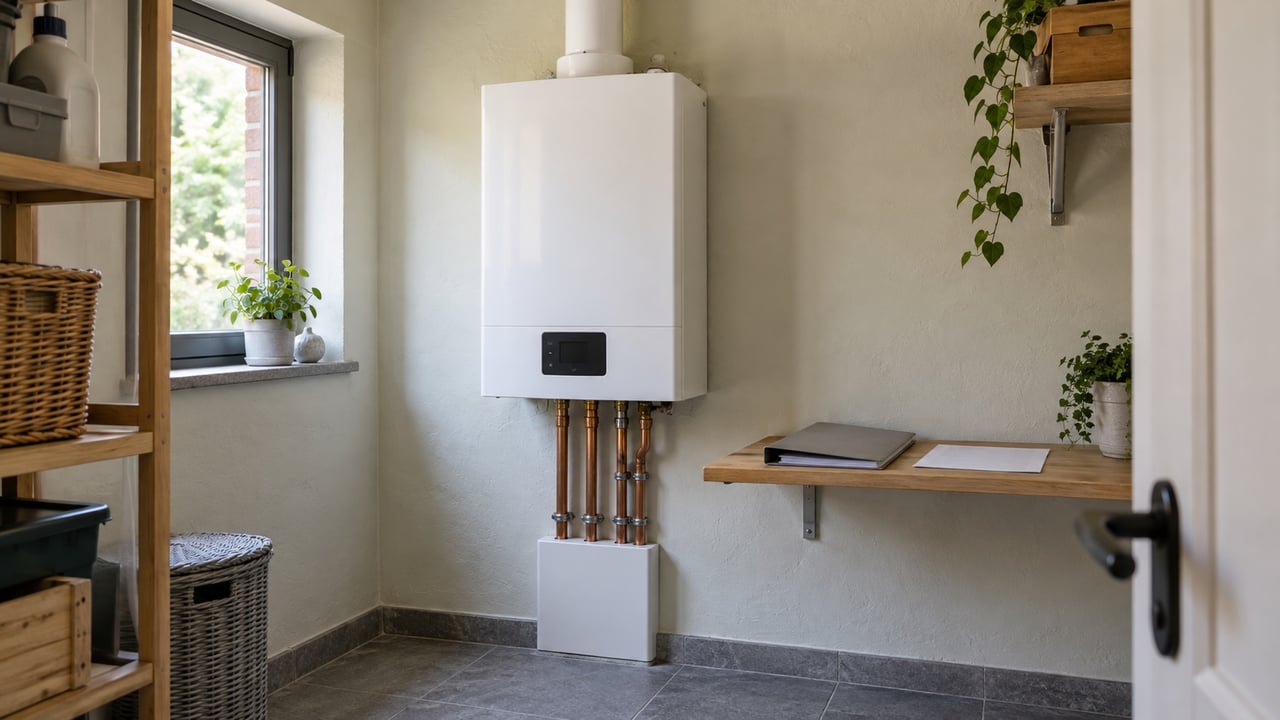
Servicing cleans and maintains the boiler; a periodic inspection checks its proper operation against regulatory requirements and produces a certificate. The same visit can cover both. In autumn, before booking your appointment, find the latest certificate, the fuel and the appliance's output: a servicing invoice is not enough to establish the next due date.
How often is a periodic inspection required?
For a combustion boiler within a central heating installation, article 13 of the Walloon order provides for:
- Liquid fuel, notably heating oil: annual inspection.
- Solid fuel, notably wood or pellets: annual inspection.
- Gas, rated useful output less than or equal to 100 kW: every three years.
- Gas, rated useful output above 100 kW: every two years.
At exactly 100 kW, the interval is therefore three years. These rules concern central heating as defined in the text, not automatically a standalone stove or instantaneous water heater. Have the rules applicable to your appliance confirmed. Source: Walloon order, articles 2 and 13.
Does inspection replace servicing?
No. Article 10 requires the user to follow the manufacturer's instructions and arrange servicing and inspections. The regulatory inspection interval is therefore not a universal servicing schedule. Check the manual too. An inspection is also required after every intervention on the combustion section. Source: articles 10 and 13.
Specify the work expected from the professional and request a quotation distinguishing servicing, inspection and any repairs. The fuel alone cannot establish a reliable price. For gas and liquid fuels, work on the combustion section is reserved for the appropriately approved technician. Check their qualification and the validity of their approval with the AWAC. For another fuel, have the required qualification confirmed. Sources: articles 7, 13 and 23 and AWAC information.
Which documents should you keep before a sale?
The user and the professional keep the two latest inspection certificates. Printouts from the measuring equipment accompany the certificate according to the measurements required. The central heating file also includes the instructions, the sizing calculation, the commissioning report and, where required, the in-depth assessment. The owner hands the file to the new user. Source: articles 2, 9 and 13.
If a certificate is missing, first ask the professional for a copy. Its absence from the folder does not prove there was no inspection. Then have the due date confirmed: the text calculates it from first commissioning and requires the inspection to take place no later than three months after the due dates. Do not rely solely on the invoice. Source: article 13.
When preparing a house in the Province of Liège, our method is to organise the documents by appliance and distinguish records found from outstanding questions. This filing does not certify the installation. Read our guide to selling with or without an estate agency or request your valuation report.
Which answers should you remember?
Does an invoice replace a certificate?
No. It describes the service invoiced, not, on its own, the result of the regulatory inspection.
Can a tenant be concerned?
Yes. The obligations in article 10 apply to the user. Allocating costs requires a separate reading of the tenancy agreement and the applicable rules.
Is the in-depth assessment a service?
No. It is a separate assessment, subject to its own conditions and exemptions. Have the requirements for your installation confirmed. Source: articles 9, 12 and 13.
References consulted on 21 October 2026: order of 29 January 2009, Wallex version of 24 February 2023, and AWAC information. General information to be checked against your installation.