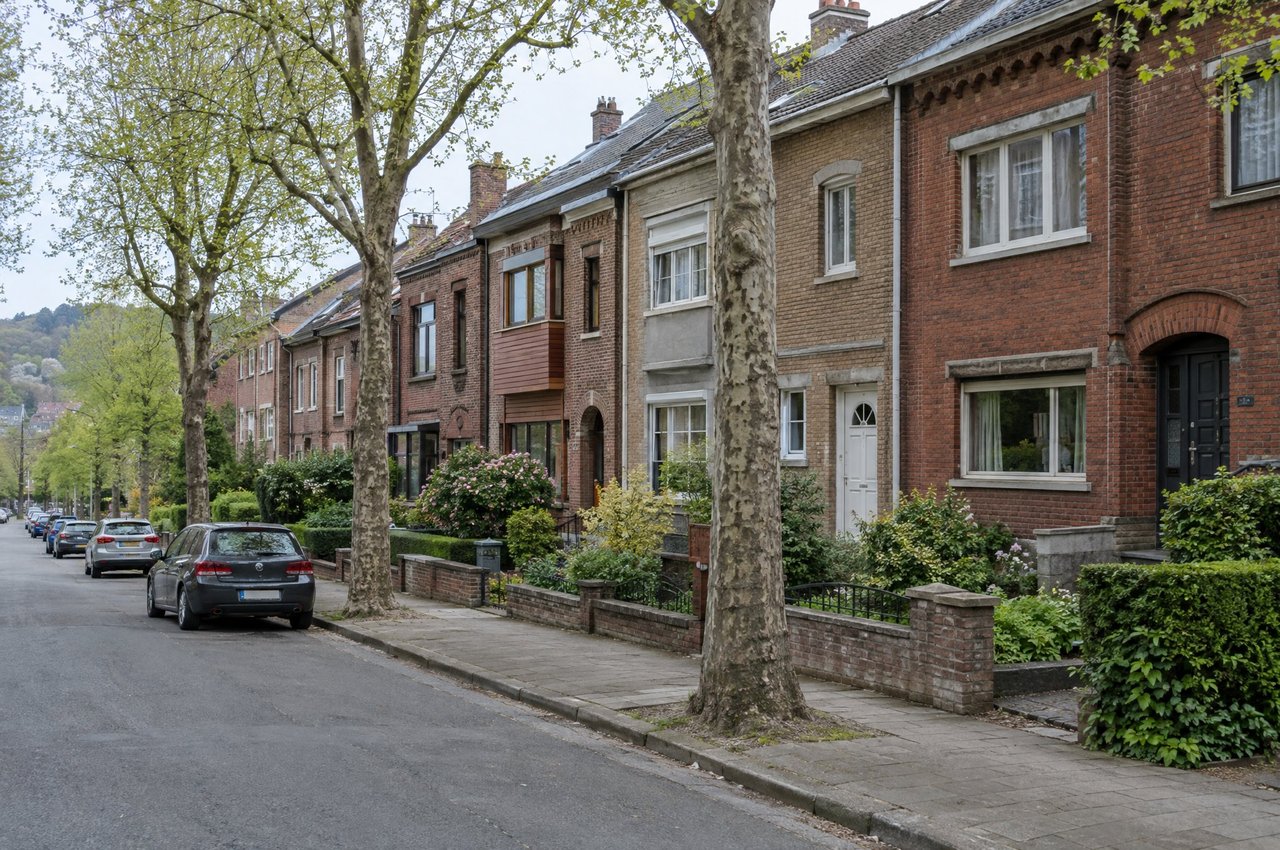
The Belgian property landscape is changing. Between independent local agencies, structured estate agency networks and self-employed agents attached to a national brand, owners may legitimately wonder which kind of partner to choose to sell their property on good terms. Understanding the differences between these models makes for an informed choice, especially when it comes to a family home, a character property or an unusual property that deserves a tailored approach.
What do we mean by estate agency networks?
An estate agency network is a structure that brings several professionals together under a single brand, giving them shared tools, shared visibility and a framework for collaboration. An estate agency network generally relies on a platform for pooling mandates, centralised training and a uniform commercial identity.
The different types of network
In France, three main categories are traditionally distinguished: franchise networks, networks of self-employed agents and cooperative networks. Each offers a distinct model, both legally and in terms of the support given to affiliated professionals.
| Type of network | How it works | Status of the professionals | Main advantages |
|---|---|---|---|
| Estate agency franchise | Brand licence, central support, royalties | Self-employed or salaried | National recognition, marketing tools |
| Self-employed agent | Shared platform, autonomous work | Self-employed (auto-entrepreneur) | Flexibility, low fixed costs |
| Cooperative network | Governance shared between members | Owners of the network | Autonomy, collective decision-making |
In Belgium, the picture is more varied. Most agencies operate independently and locally, without being affiliated to a large national network. Self-employed agent structures, very widespread in France, remain little developed in the Walloon provinces.
Features of the Belgian market
The Walloon property sector relies mainly on local agencies, often family-run or headed by a licensed estate agent (IPI). This model fosters in-depth knowledge of the area and close ties with notaries, planners and municipal stakeholders.
Unlike the large national estate agency networks, these structures favour local roots over a multiplication of mandates. This has direct consequences for working methods, follow-up and the ability to adapt the strategy to the context of a particular property.
Local agencies versus networks: the concrete differences
When an owner is considering selling a character home or a prestige property, they need to ask what kind of support they require. Estate agency networks often offer a standardised service with powerful digital tools, but the approach can lack personalisation.
The importance of a tailored strategy
Selling a mansion house in Liège does not follow the same logic as selling a contemporary villa near Namur or an unusual property in Belgian Luxembourg. Every property requires precise positioning, tailored storytelling and a presentation consistent with its identity and its market.
A structured network can offer rapid visibility thanks to wide distribution, but this exposure does not guarantee a fair valuation. Without a tailored sales strategy, the risk is a growing number of unqualified viewings and a price that gradually weakens.
Independent local agencies, for their part, build their method around an intimate knowledge of the market. They understand the local planning specifics, the subtleties of the EPB, what local notaries expect and how prices move street by street.
Quality of follow-up and availability
In a network, the professional may be attached to a structure that handles dozens or even hundreds of mandates at the same time. This can dilute the attention given to each property.
- The local agency generally provides more individual follow-up.
- The self-employed agent has flexibility but may lack administrative infrastructure.
- The cooperative network combines autonomy and pooled resources, with shared governance.
For an owner who wants attentive, transparent and available support, the local approach offers a calmer framework. It allows regular dialogue, precise handling of viewing feedback and continuous adjustment of the strategy.
Understanding why professionals choose a network
Professionals who join an estate agency network are often looking for a support structure, a recognised brand and advanced technological tools. The appeal of property careers for young professionals is explained in part by the promise of autonomy and potentially high earnings.
Shared tools
Estate agency networks often provide:
- Centralised management platforms
- Ready-made marketing materials
- Ongoing training
- Legal support
- Listings on national property portals
These resources are useful, but they do not replace an in-depth understanding of a local market or the ability to define a defensible pricing strategy. A character property requires a narrative approach, careful presentation and a message that respects its history and strengths.
The question of price and valuation
One of the central issues for any owner is obtaining an accurate valuation. Networks may tend to overvalue slightly to win the mandate, then gradually adjust the price if the property does not sell quickly. Although common, this practice weakens the seller's position.
A serious local agency favours a reasoned property valuation, based on an analysis of recent sales, the specific features of the property and the current market context. This method avoids haphazard marketing that wears down the perceived value of the property.
Choosing the right partner to sell a character property
For an owner selling a family home, a mansion house or an unusual property, the choice of professional should rest on concrete, measurable criteria.
Essential selection criteria
Here are the points to check before entrusting a mandate:
- Knowledge of the local market: does the agent really know the prices, the time it takes to sell and the buyer profiles in your area?
- Valuation method: is the approach rigorous, documented and based on recent comparables?
- Presentation strategy: how will the property be presented, photographed and described?
- Buyer qualification: what filters are applied to avoid time-wasting viewings?
- Follow-up and communication: how often will you hear back, with what reporting tools and how much transparency?
These criteria apply whatever model you choose. In practice, though, an independent local agency rooted in the provinces of Liège, Namur or Luxembourg will often be better equipped to meet these requirements.
Pitfalls to avoid
Some approaches may seem reassuring but prove counterproductive:
- Mass distribution without targeting: more channels do not guarantee better contacts.
- An asking price that is too high: this leads to disappointment and wears down buyers' interest.
- No storytelling: a character property without a story loses part of its perceived value.
- Poor coordination with the notary: delays, legal uncertainty, a badly drafted clause in the sales agreement.
Serious support anticipates these pitfalls and structures the sales process around clarity, method and respect for the property.
Estate agency networks and governance
Some networks, such as l'Adresse, operate on a cooperative model in which the members collectively own the structure. This system promotes transparency and aligned interests, but it remains marginal in Belgium.
Advantages of the cooperative model
- Shared decision-making among member professionals
- No pressure from an outside franchisor
- Pooled costs without hierarchical dependence
- Flexibility to adapt practices locally
This model can suit professionals looking for a collective framework without losing their autonomy. For an owner, however, what matters remains the quality of individual support and the consistency of the sales method.
The limits of pooling
Pooling mandates can dilute responsibility. When several agents from the same network offer the same property, coordination becomes complex and the message can lack consistency. The seller sometimes ends up without a clearly identified point of contact.
A local agency, by contrast, takes on the whole mandate, from the outset to the signing before the notary. This continuity of follow-up makes the process easier to steer and builds trust.
Estate agency networks and digital change
Technology platforms are transforming the sector. Estate agency networks are investing heavily in CRM tools, automated distribution and data analysis. These innovations can improve efficiency, but they do not replace human contact and on-the-ground expertise.
Useful digital tools
| Tool | Function | Benefit for the seller |
|---|---|---|
| Centralised CRM | Managing contacts and follow-ups | Structured follow-up of prospective buyers |
| Virtual tours | Immersive presentation of the property | Initial remote screening |
| Automated reporting | Summary of viewings and feedback | Transparency on progress |
| Multi-listing portals | Simultaneous publication on several sites | Wider visibility |
These tools are effective if they are part of a coherent strategy. But a character property does not sell through technology alone. It requires careful presentation, a well-judged message and rigorous buyer selection.
The risk of dehumanisation
Automating follow-ups, standardising presentation materials or multiplying unqualified viewings can harm the perception of the property. An owner expects personal support, not an industrial process.
Local agencies often combine digital tools with a human approach, favouring the quality of exchanges over the number of listings. This balance is essential to sell at the right price, on good terms and without unnecessary stress.
Comparison with other ways of selling
Beyond estate agency networks and local agencies, some owners consider selling on their own or using intermediary platforms. Each approach has advantages and risks.
Selling without an intermediary
Selling yourself saves the agency commission, but means you have to:
- Produce an accurate valuation without a reliable comparison tool
- Organise viewings and handle enquiries
- Qualify buyers and check their solvency
- Draft the sales agreement or coordinate with the notary
- Bear the responsibility in the event of an error in your disclosures
For a prestige or character property, this approach is risky. Potential buyers expect a structured message, professional presentation and reassuring support. The absence of an intermediary can hold back their commitment.
Intermediary platforms
Some services offer online distribution for a fixed fee, without full support. This model suits standard properties, but is poorly suited to unusual properties that call for storytelling, staging and qualification of buyer profiles.
The choice between selling alone, using a platform or appointing an agency depends on the type of property, the owner's timetable and their tolerance for risk. For a property that represents a family asset or a significant investment, tailored support remains the safest option.
What to check before entrusting a mandate
Before signing a sales mandate, whether with an estate agency network or a local agency, certain points deserve careful checking.
Documents and commitments
- Length of the mandate: opt for a reasonable term (6 to 12 months) with the option of review.
- Sole agency or multi-agency mandate: sole agency commits the seller but strengthens the agent's involvement.
- Commission and terms: clarify the rate, additional costs and payment conditions.
- Marketing channels: list the portals, materials and actions planned.
- Termination clause: check the exit conditions in the event of disagreement.
These elements must appear clearly in the contract. A serious professional takes the time to explain them and answer every question.
Questions to ask at the first meeting
Here is a list of useful questions to assess the working method:
- How do you estimate the sale price?
- Which similar properties have you sold recently in the area?
- How do you plan to showcase my property?
- What type of buyers are you targeting?
- How often do you report back?
- How do you handle negotiations?
- What support do you provide through to the signing before the notary?
The answers help gauge the quality of the approach, the rigour of the method and the ability to adapt to the property concerned. A professional who answers vaguely or with stock phrases should set alarm bells ringing.
Estate agency networks and legal matters in Belgium
Belgian law imposes strict obligations on estate agents, whether they are independent or attached to a network. Compliance with these rules determines the security of the transaction.
Obligations of the IPI agent
Every licensed estate agent must:
- Hold an IPI number issued by the Professional Institute of Estate Agents (IPI).
- Take out professional liability insurance.
- Comply with the rules of professional conduct on information, transparency and fair dealing.
- Ensure listings comply with the law (mention of the EPB, living area, etc.).
- Hold funds in a client account until the deed of sale is signed.
These obligations apply to all professionals, whether they work in a network or independently. It is essential to check the IPI licence before entrusting a mandate.
Walloon specifics
In Wallonia, selling a property involves specific steps:
- EPB (Energy Performance of Buildings): a mandatory certificate to be provided from the moment the property is advertised.
- A certified extract from the soil condition database (BDES): mandatory for every sale in Wallonia.
- Planning permission and compliance: checking that the works carried out are lawful.
- Sales agreement (compromis): signed before a notary or privately with registration.
A competent professional masters these steps and anticipates potential obstacles. This local expertise is a major asset, often more developed in independent agencies than in standardised estate agency networks.
Personal support: the guarantee of a successful sale
Selling a family home, a character property or an unusual property takes more than simply advertising it. It requires a thorough understanding of the property, its history and its perceived value. Personal support makes it possible to build a coherent strategy, prepare the property and target the right buyers.
The stages of a tailored strategy
- Meeting and listening: understanding the seller's context, motivations and timetable.
- Analysis of the property: identifying its strengths, the features to highlight and possible adjustments.
- Reasoned valuation: setting a defensible price based on comparables and the current market.
- Preparing the property: presentation advice, minor works, staging.
- Creating the storytelling: writing a description that brings out the property's identity.
- Targeted marketing: selecting the relevant channels and qualifying contacts.
- Organising viewings: preparing buyers, accompanying them methodically, gathering feedback.
- Negotiation: defending the price, analysing offers, advising the seller.
- Follow-up through to signing: coordination with the notary, managing deadlines, final checks.
This method rests on continuity, transparency and adaptation. It stands in contrast to the standardised approaches of estate agency networks, which favour volume at the expense of personalisation.
Why quality matters more than quantity
Multiplying viewings without qualifying buyers tires the property and exhausts the seller. Every viewing must be prepared, every contact analysed. An owner selling a valuable property deserves respectful, structured, results-oriented support.
The properties for sale in markets such as Liège, Namur or Luxembourg call for an approach that values uniqueness rather than standardisation. Only a local agency can guarantee that attention.
Estate agency networks: relevance by type of property
Not every property lends itself to the same kind of support. A recent flat in a standard building can be sold efficiently through a structured network. But a mansion house, a renovated farmhouse or a contemporary villa on a large plot calls for different positioning.
Standard properties
For these properties, estate agency networks can offer:
- Rapid distribution on numerous portals
- Effective virtual tour tools
- Standardised administrative handling
Even so, the quality of the valuation and personal follow-up remain decisive.
Character and unusual properties
These properties require:
- Unique storytelling that conveys the history, the architecture and the surroundings.
- Careful presentation: professional photography, guided viewings, printed brochures.
- Precise targeting: seeking out buyers who appreciate the property's strengths.
- A coherent pricing strategy: avoiding both underpricing and overvaluation.
Independent local agencies handle these dimensions better. They build their reputation on the quality of service and lasting client satisfaction, not on transaction volume.
The importance of transparency and follow-up
An owner who entrusts their property expects regular feedback, clear information and a precise view of progress. Estate agency networks can offer reporting tools, but the availability and quality of human contact remain essential.
Useful follow-up indicators
| Indicator | Purpose | Recommended frequency |
|---|---|---|
| Number of viewings arranged | Measure the interest generated | Weekly |
| Detailed feedback from visitors | Adjust the message or the price | After each viewing |
| Trend in online views | Assess visibility | Monthly |
| Profiles of buyers contacted | Check that targeting is consistent | Monthly |
| Comparison with the local market | Put results in context | Monthly |
These elements make it possible to manage the sale methodically and anticipate the necessary adjustments. A rigorous professional shares this data without waiting to be asked.
Proactive communication
The seller should not have to chase their agent for news. Clear, regular and honest communication builds trust and makes decisions easier. This quality of relationship is seen more often in local agencies than in network structures, where hierarchical distance can create filters.
Estate agency networks and the outlook
The sector continues to evolve. New models are emerging, driven by digitalisation, the demand for transparency and the aspirations of professionals. Yet the fundamentals of selling property remain: an accurate valuation, careful presentation, attentive support and balanced negotiation.
Observed trends
- Self-employed agents gaining expertise: although marginal in Belgium, this approach could develop.
- Stronger local cooperation: some professionals form informal alliances to pool resources without losing their independence.
- Sellers becoming more demanding: owners expect more clarity, method and respect.
- Continuing professionalisation: training, certifications, compliance with professional standards.
These developments do not call into question the relevance of local agencies. On the contrary, they confirm that quality of service, proximity and local roots remain decisive strengths.
Understanding the differences between estate agency networks and local agencies makes for an informed choice suited to your property and your expectations. To sell a character home, a prestige property or an unusual property in the provinces of Liège, Namur or Luxembourg, personal, rigorous and respectful support makes all the difference. YOUHOME offers a clear method, an accurate valuation and complete follow-up so that you sell at the right price, without stress or improvisation.