# Furnished or unfurnished letting: what changes for your house?
Leaving furniture in place does not automatically make a letting more profitable or flexible. Compare the intended use, the contract, income after tax and expenditure over the same period. A furnished house is not automatically tourist accommodation, and the furniture does not give you a right to take the property back on your preferred date.
## What use do you intend to offer?
Before choosing a contract, describe your plans: will the tenant live there, establish their main residence or stay as a visitor? In French-speaking Wallonia, the residential tenancy decree excludes tourist accommodation from its scope. Its main residence rules depend, among other things, on the use of the dwelling and the landlord's agreement, subject to the conditions of article 52. The presence of furniture does not settle this question on its own.
The [Walloon residential tenancy decree](https://wallex.wallonie.be/eli/loi-decret/2018/03/15/2018201408-1), articles 2, 3, 27, 28, 52 and 55, also governs written tenancy agreements, condition reports and the duration of main residence tenancies. If you plan to return yourself, have the options and conditions for ending the tenancy checked before signing. Your personal timetable does not guarantee availability.
## What should you arrange for the furniture?
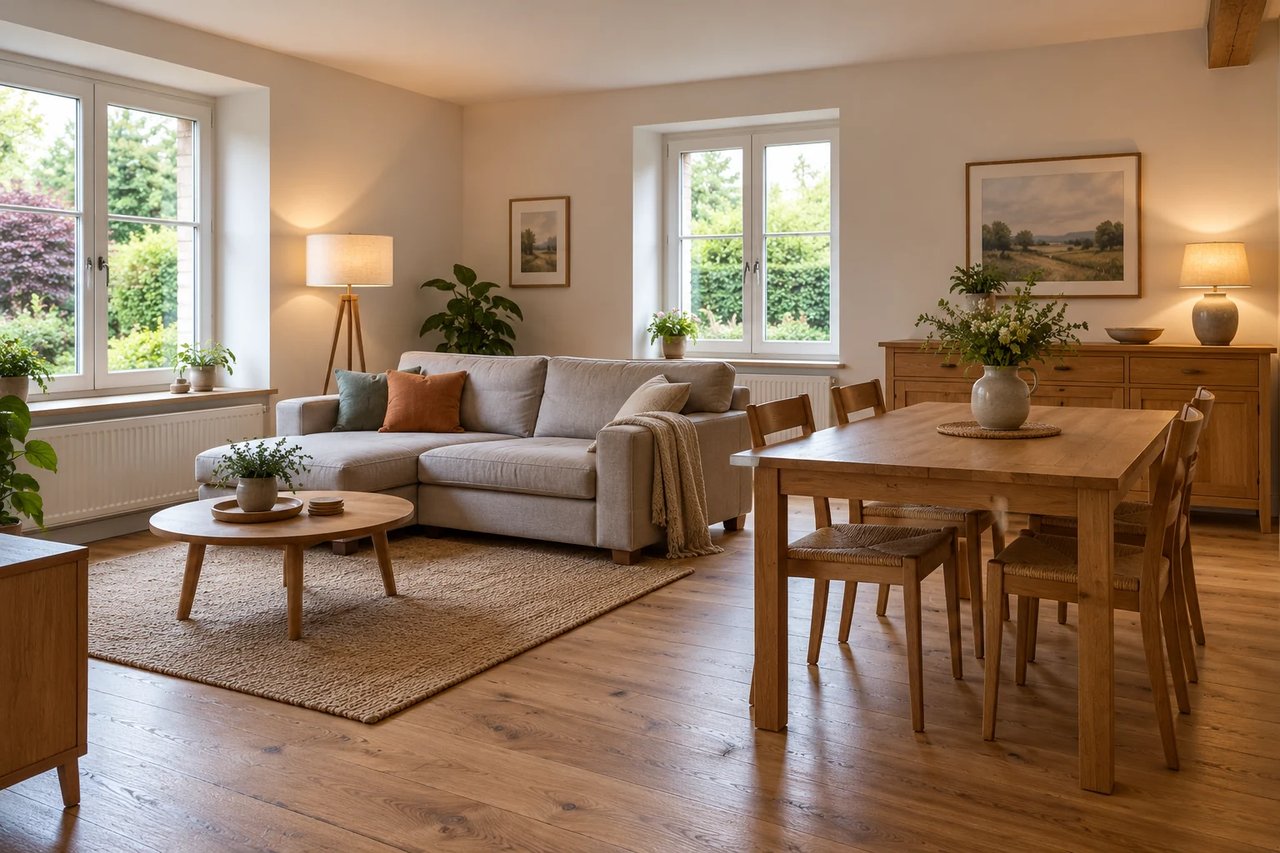
The decree requires a written tenancy agreement and a detailed entry condition report drawn up jointly by the parties. In addition, we recommend a precise furniture inventory shared with the tenant. This is a practical method, not a statutory list of compulsory furniture.
Record the items present, their condition and visible defects. For appliances, describe how they were found to function. Dated photographs linked to the inventory make comparison easier. A description such as "complete living room" tells you less than an account of the furniture actually entrusted to the tenant.
Remove objects you do not wish to make available for everyday use. For an antique piece or an expensive appliance, obtain a repair or replacement price before setting aside your reserve. Do not count every replacement as an amount automatically recoverable from the tenant: normal wear and tear is not the same as damage attributable to them.
## How do you compare income after tax?
The [FPS Finance section "Furnished letting and services"](https://fin.belgium.be/fr/particuliers/habitation/louer-donner-location/revenus-locatifs/particulier) distinguishes income from the building and income from the furniture. The following information concerns letting outside a professional activity to an individual who does not use the dwelling for professional purposes.
For the building, the taxable amount is based on indexed cadastral income, a Belgian notional property income, multiplied by 1,4. For the furniture, net income is in principle taxed at 30 %. This rate is not the total tax on the letting.
According to FPS Finance, unless the contract states otherwise, gross rent for the furniture is set at a flat 40 % of the total rent. Expenses may be estimated at 50 % of that gross furniture rent, or deducted on the basis of allowable actual expenses, excluding interest. These percentages therefore have different bases: they do not all apply to the total rent.
Have the allocation in the tenancy agreement and your circumstances examined before signing. Professional use, a company tenant, paid services or a professional activity require a different analysis. Do not assume that choosing furnished letting automatically brings a tax advantage.
## Which expenses should you compare over the same period?
Prepare two budgets: with the furniture and without it. Have a plausible rent assessed for each arrangement rather than adding a standard premium for furnished accommodation. Then distinguish the following items.
- At the outset: additional purchases, transport, installation or storage of removed furniture.
- During the tenancy: maintenance, repairs, replacements and time spent managing the furniture provided.
- For the house: charges you continue to bear and insurance to check, including furniture cover.
- For income: proposed rent, possible periods without a tenant and the tax treatment applicable to your circumstances.
Also test a less favourable assumption, such as an appliance needing replacement or finding a new tenant taking longer. Obtain prices for uncertain expenditure instead of assigning assumed amounts. A period without rent is neither certain nor unique to furnished letting, but your budget should be able to absorb it.
## Which questions remain before you choose?
### Does furnished accommodation suit every tenant?
No. In a constructed example, a family that already has furniture may prefer empty rooms; someone without furniture may appreciate an equipped house. These situations illustrate needs, not measured demand in the Province of Liège.
### Can you take the house back as soon as you return?
Not simply because it is furnished. Have the tenancy duration, termination options and conditions applicable to your return examined. Settle this before committing yourself.
### What should you keep if you are considering a sale?
Keep the tenancy agreement, its annexes, the condition report and the inventory together. Future availability must be checked before it is advertised to a buyer. Our [guide to preparing a sale](https://youhome.immo/journal/preparer-vente-maison-wallonie/) explains the other documents to organise.
If you are deciding between keeping and selling your house, you can [request your valuation report](https://youhome.immo/en/valuation/request/) to factor its sale value into your decision.
Practical guides
Furnished or unfurnished letting: what changes for your house?
Furniture, tenancy, tax and budget: compare both options over the same period before letting your house in Wallonia.