# Usufructuary and bare owner: who is responsible for the work?
Under current Belgian law, the usufructuary carries out maintenance repairs and the bare owner carries out major repairs, subject to exceptions and a possible contribution from the usufructuary. Before allocating a quotation, check the deed, when the usufruct arose and the nature of each intervention. A bill is not automatically split equally.
## Which deed and legal regime should you check?
A usufruct allows someone to use a property and receive its fruits, such as rent, while the bare owner holds ownership subject to that right. Find the deed of gift or inheritance documents that created it. Parties may depart from the rules of Book 3, except definitions or where the law provides otherwise: ask the notary to examine the clauses rather than disregard them. See articles 3.1 and 3.138 of the [consolidated Civil Code](https://www.ejustice.just.fgov.be/eli/loi/2020/02/04/2020A20347/justel).
The reform came into force on 1 September 2021. Unless otherwise agreed, it does not apply, in particular, to future effects of earlier legal acts and events, or to new legal acts and events relating to rights in rem arising from them. Acquired rights are preserved. The quotation date alone therefore does not determine the applicable regime. See articles 37 and 39 of the [law of 4 February 2020](https://www.ejustice.just.fgov.be/eli/loi/2020/02/04/2020020347/justel).
## How do you distinguish maintenance from major repairs?
Article 3.153 requires the usufructuary to carry out maintenance repairs necessary in the short or long term to preserve the property's value, subject to normal wear, ageing and force majeure. Not every deterioration is therefore automatically attributable to them.
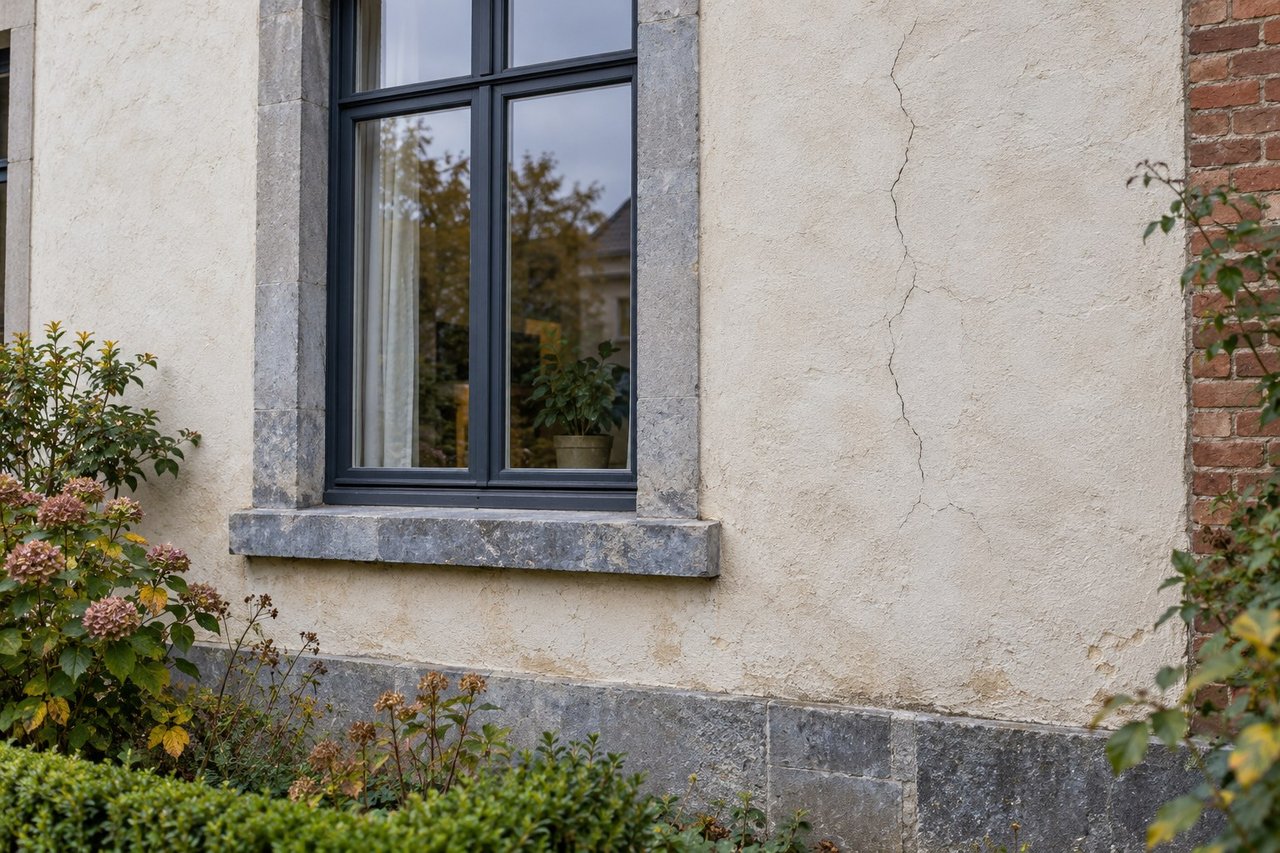
Under article 3.154, major repairs concern the structure of the property or its inherent components, or their cost manifestly exceeds the property's fruits. These criteria should not be replaced with a standard amount. The label 'roofing work' is not enough: ask what is defective, why and which components will be replaced.
Our method for preparing the discussion is to separate the items:
- Describe the damage, its known cause and the urgency.
- Distinguish maintenance, structural work and comfort improvements.
- Obtain separate costs for each intervention and any additional work.
- Review the deed's clauses with the notary before agreeing on funding.
These rules appear in articles 3.153 and 3.154 of [Book 3](https://www.ejustice.just.fgov.be/eli/loi/2020/02/04/2020A20347/justel). A desired improvement does not automatically become a major repair that can be imposed on the other rights holder. Its budget needs a separate discussion.
## Does the bare owner fund major repairs alone?
No. They must carry them out after consulting the usufructuary. The latter cannot claim compensation for interference with their enjoyment. However, the bare owner is not required to undertake major repairs relating to structures and plantings installed by the usufructuary, or repairs caused exclusively by the usufructuary.
When carrying out major repairs, the bare owner may require a proportionate contribution from the usufructuary. This depends on the value of the usufruct relative to full ownership, under the statutory calculation rules. Have the applicable calculation established before deciding on a share. Article 3.154, in its consolidated version, refers to Book 4: the bill does not necessarily fall to one person alone.
Record the agreed work, site organisation and allocation of costs separately. For a roof, for example, a quotation might combine a localised repair, structural remedial work and a comfort feature. This hypothetical example calls for an item-by-item analysis, not a blanket allocation.
## Which questions should you settle before commissioning work?
### Do property charges follow the same rules?
No. Under article 3.156, the usufructuary bears periodic charges relating to use and enjoyment. The bare owner bears extraordinary charges, even when paid periodically. For structures and plantings installed by the usufructuary, the usufructuary bears both ordinary and extraordinary charges for the duration of the usufruct.
### What if the other rights holder refuses to carry out repairs?
Article 3.155 provides for asking the court to order them to carry out the work, potentially subject to a penalty payment, or to authorise the other party to undertake the necessary work with recovery of costs under the statutory regime. Commissioning work alone does not guarantee reimbursement. If there is a deadlock or urgency, clarify the appropriate course before committing yourself.
### Which documents should you prepare for the notary?
Gather the deed and its clauses, the date the usufruct arose, diagnostic reports, detailed quotations and existing agreements. Add information about the cause of the damage and work already carried out by the usufructuary. This preparation separates established facts from decisions still to be made, without inventing a budget.
To consider this work within a transfer of property, see our guide to [gifting property in Wallonia](https://youhome.immo/en/journal/gifting-property-wallonia-before-giving-your-house/). If you are considering a sale in the Province of Liège, you can [request your valuation report](https://youhome.immo/en/valuation/request/) to examine the house's value in its current condition. This valuation does not replace the notary's legal analysis.
Practical guides
Usufructuary and bare owner: who is responsible for the work?
Before allocating a quotation, check the deed, when the usufruct arose and the nature of the work. Carrying out a repair does not always mean funding it all.