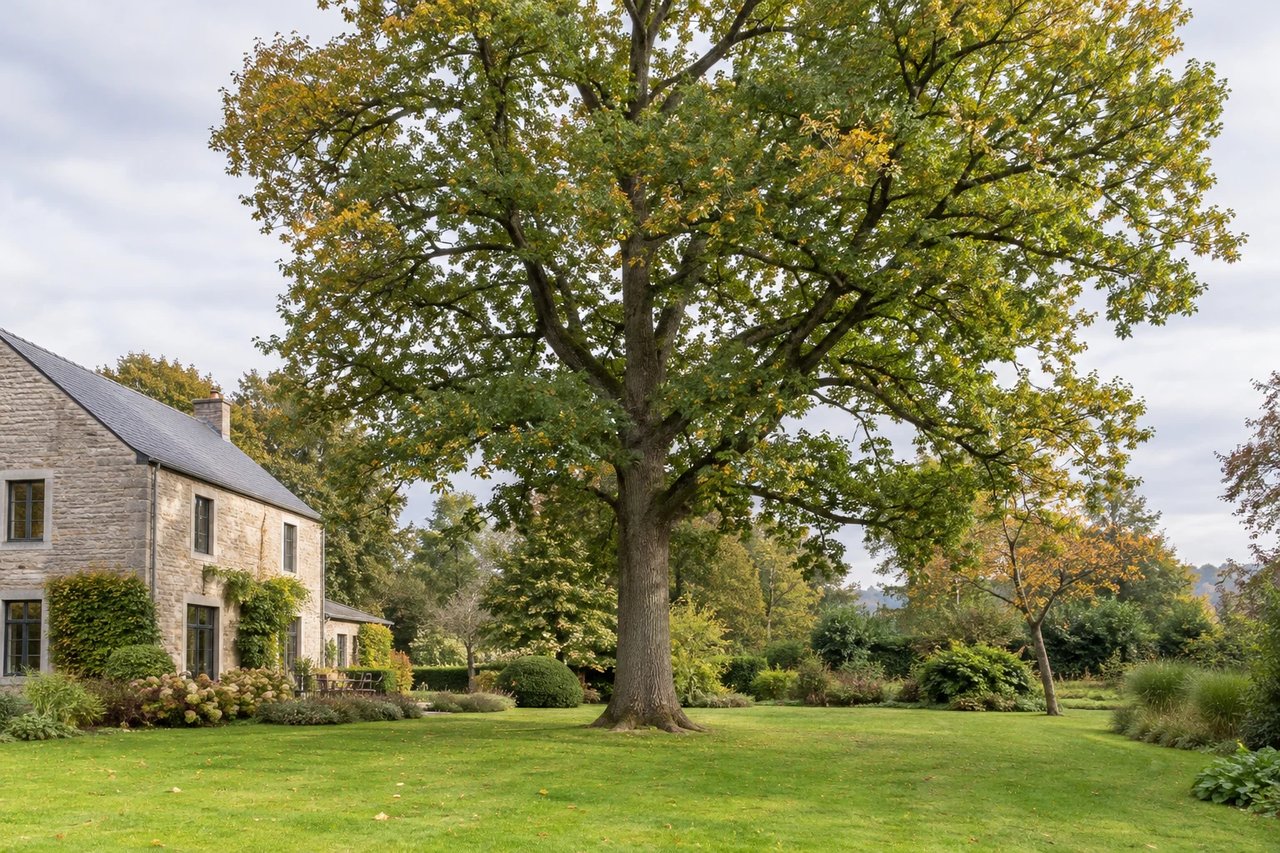
The tree does not appear on any map. That alone does not mean you can fell it. In Wallonia's French-speaking municipalities, a tree may also be protected because of its characteristics, the zone it grows in or the garden's protected status. Before commissioning the work, identify the tree and its plot, then ask your municipality to confirm the steps required.
The planning rules described here apply to French-speaking municipalities. In the German-speaking municipalities, a separate planning regime applies. Ask your municipality which rules apply.
How do you check the protection of the tree and garden?
Start with the official maps and the lists available from your municipality. The Walloon public service, SPW, explains where to find the relevant information on its page 'Savoir si un arbre ou une haie est remarquable ou classé(e)'.
A remarkable tree and a tree protected as heritage fall under different protection regimes. For heritage protection, also check the boundaries of the protected park or garden: a tree may be covered by the protection of the whole site without being individually identified. The municipality and the Agence wallonne du Patrimoine can clarify the applicable heritage procedure.
Remarkable status may arise from inclusion on a list, but also from regulatory criteria. The absence of a map marker therefore does not complete the checks. Send photographs, the species if known, dimensions and views from public spaces so the situation can be assessed. The tree's age alone is not enough to determine the steps required.
Which other rules should you check for the plot?
Remarkable status is not the only check. On its page 'Intervenir sur un arbre, une haie ou un arbuste en Wallonie', the SPW notes, among other things, that felling isolated high-stem trees in a green space zone requires a permit. This zone is a planning designation: the presence of grass around the tree does not establish that designation.
A tree forming part of an avenue may also be subject to specific criteria. Ask the planning or environment department whether additional municipal or location-specific provisions apply, particularly near a road, watercourse or utility networks. The fact that the tree grows in a private garden does not resolve these questions.
What should you do if the tree seems dangerous or needs pruning?
A leaning tree, a broken branch or a visible change warrants an assessment by a competent professional. Pass their findings on to the municipality. If the tree poses a short-term risk of major damage to people or property, the SPW asks owners to contact the municipal administration about public safety measures. Do not assume that a suspected danger exempts you from administrative steps.
Describe the proposed work precisely: felling, pruning or nearby works. For a remarkable tree, protection may cover damage to the roots and changes to its shape. Heavy pruning is therefore not automatically an option without formalities. Ask for clarification of the technical options and a tailored quotation before deciding on the work.
There is no single calendar for work that applies to every garden. The SPW recommends avoiding hedge trimming during the nesting season and checking for nests. This advice does not amount to general permission to fell trees during the rest of the year. Where nests or habitat requiring protection are present, consult the municipality or the Département de la Nature et des Forêts.
What information should you send to the municipality?
To obtain an answer that concerns the right tree, prepare the following information. This is practical guidance, not a universal list of mandatory documents:
- the address, cadastral reference if known and precise location of the tree;
- photographs of the whole tree, its trunk and surroundings, particularly from public spaces;
- the species if known and any available measurements, explaining how they were taken;
- the reason for the work, its description and any professional advice already obtained;
- details of any heritage protection and available previous permits.
Ask which regimes apply, which procedure to follow and which conditions to meet before scheduling the work. An answer about remarkable status does not necessarily resolve the other protections. Keep the written reply, any permits and their conditions with the plans and photographs.
How do these checks fit into plans to sell?
Before selling, do not treat tree felling as an obvious improvement. First clarify the outcome you want: more light, a redesigned terrace or a garden that is easier to maintain. Have the possible solutions assessed and their cost established through quotations, without starting work while the applicable requirements remain uncertain.
The information gathered helps you explain to buyers what is known, which steps have been taken and what still needs to be established. It complements the documents useful for preparing the sale of your house in Wallonia.
What are the answers to frequently asked questions?
Can a tree absent from maps be felled freely?
No. Protection criteria, the plot's planning designation or local rules may apply. Ask the municipality to check the situation before commissioning the felling.
Does a professional assessment replace permission?
No. It clarifies the tree's condition and the technical options. The administrative steps and any permissions required still need to be established with the competent authorities.
Is an answer about remarkable status enough?
Not necessarily. Heritage protection, the zone and the other rules applying to the work must also be examined. Ask for an answer covering the whole project as described.
Preparing to sell a house with a tree-filled garden? Request your valuation report to consider the house and its outside space as a whole. Tree-felling questions should be checked with the municipality and competent professionals.