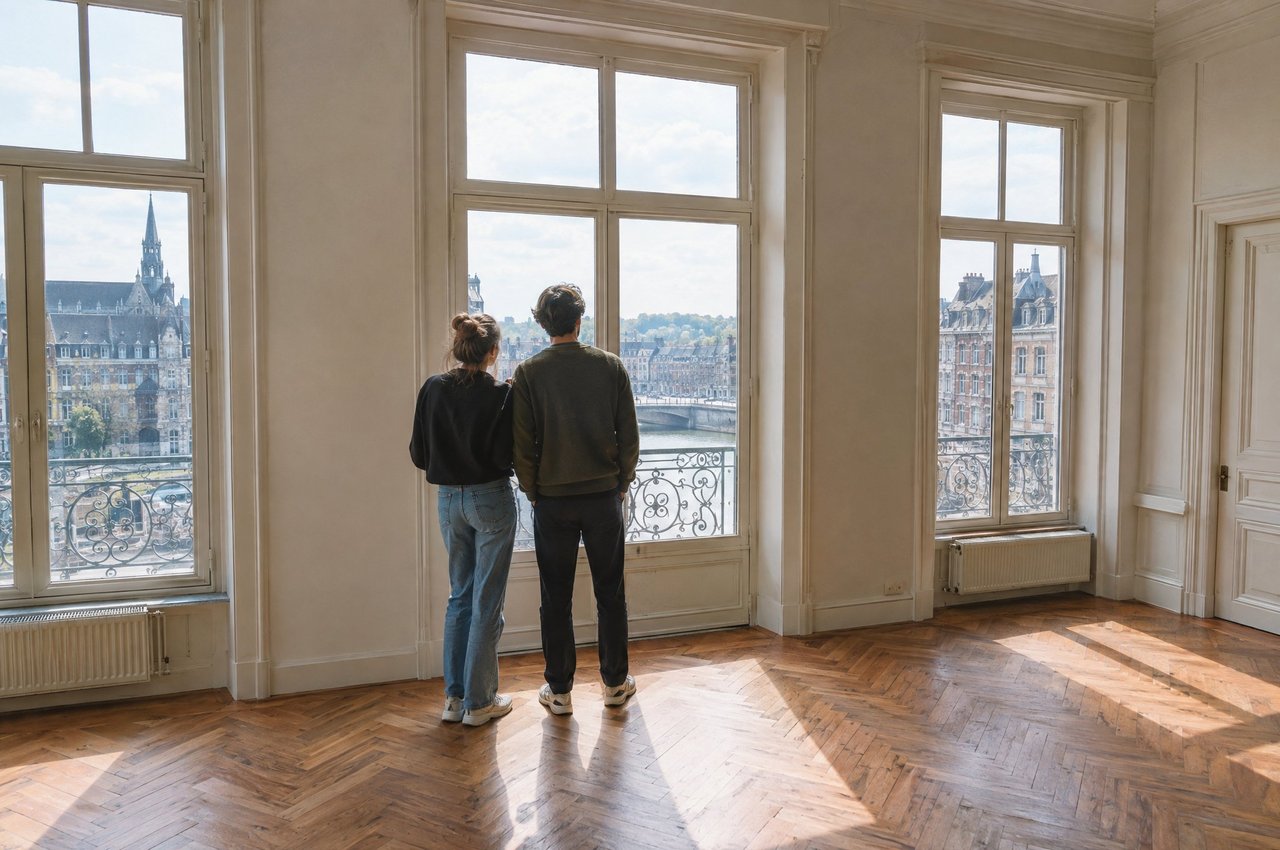
Buying a house is a major commitment, both financially and emotionally. For many Belgian buyers, particularly in the provinces of Liège, Namur and Luxembourg, it is part of a life plan: starting a family, settling down for the long term, moving closer to nature or enjoying a quality setting. Unlike buying a flat, buying a house involves specific considerations: the land, the garden, the condition of the building, the potential for alterations, upkeep costs. This guide takes you through every stage, from defining your needs to signing before the notary, with a realistic view of today's Belgian market and the precautions to take to avoid unpleasant surprises.
Defining your project before buying a house
Before you even look at listings, it is essential to clarify what you expect. Buying a house without a clear project often leads to endless viewings, hesitation and, in the end, choices made by default.
The fundamental criteria
Ask yourself the right questions:
- What living area really meets your needs?
- How many bedrooms do you need today, and in five years?
- Do you want a garden for the children, a vegetable plot, or simply some outdoor space?
- Do you prefer a single-storey house, or are you happy with stairs?
- Do you favour character (older buildings, volumes, charm) or modern comfort?
These questions give your search a structure and stop you spreading yourself too thin.
Location plays a decisive role. In the provinces of Liège, Namur and Luxembourg, prices can vary by a factor of two depending on the municipality and the proximity of motorways, schools, shops and services. A house in Nandrin or Neupré will not have the same profile as a property in Hamoir or Amay, even with the same floor area.
Budget and borrowing capacity
Your budget shapes your entire project. It is not limited to the purchase price: it includes the notarial deed costs, registration duties (3% in Wallonia for a sole own home since 2025, 12.5% in other cases), bank arrangement fees and any works.
| Item of expenditure | Approximate share |
|---|---|
| Purchase price | 100% |
| Registration duties | 3% (sole own home) or 12.5% |
| Notary's fees | 2 to 3% |
| Bank fees | 0.5 to 1% |
| Any works | Varies with condition |
To assess your borrowing capacity, banks generally apply a maximum debt-to-income ratio of 33 to 40% of your net monthly income. Tackling this step early with a mortgage broker or directly with your bank lets you target properties that match your means.
Actively searching for a house
Once your project is defined, the search phase begins. It requires method, regularity and a good knowledge of the local market.
Where to search effectively
Property platforms remain the main source of information. Immoweb, Zimmo, Immoscoop and the websites of specialist agencies such as YOUHOME for character homes and unusual properties in eastern Wallonia offer a broad view of the market.
Word of mouth works particularly well in rural and semi-rural areas. Let people around you know you are looking: your notary, mortgage broker, neighbours, local shopkeepers. Some opportunities never go through the usual channels.
Local estate agencies hold properties in their portfolio that are not always widely advertised, particularly high-end properties or discreet situations (estates, separations).
Decoding a property listing
Reading a listing calls for a critical eye. Beyond the attractive photos, certain elements deserve your attention:
- The asking price: is it consistent with the local market for this type of property?
- Energy performance (EPB): a D, E or F certificate means insulation works in the medium term.
- The year of construction or renovation: this tells you about the likely condition of the systems (roof, window frames, heating).
- The words "needs refreshing" or "good general condition": these terms are subjective, only a viewing will tell.
- The plot size: check that it meets your expectations and whether planning restrictions apply.
Also look at the key stages of buying a house so you can better anticipate each phase of the process.
Organising successful viewings
A house viewing should never be improvised. It must be methodical and thorough, with detailed notes.
Preparing your viewing
When booking the appointment, ask a few questions in advance: the reason for the sale, how long the property has been on the market, recent works, annual costs (heating oil, electricity, property tax (précompte immobilier)). This information focuses your attention during the viewing.
Bring a notebook, a tape measure and possibly a camera (with the seller's agreement). Note everything that strikes you, positive or negative.
Points you must check
The general condition of the building:
- Roof: slipped tiles, signs of damp in the loft
- Façades: cracks, worn pointing, render problems
- Window frames: single or double glazing, condition of the seals, condensation
- Heating: type of energy, age of the boiler, regular servicing
- Electrics: compliant fuse board, enough sockets, recent installation or in need of rewiring
Damp is a major point of vigilance in Belgium. Inspect the cellars, the walls in contact with the ground, the corners of rooms and the bathrooms. A musty smell, stains or peeling wallpaper are all warning signs.
The garden and outdoor areas deserve as much attention as the interior. Check the orientation, the sunlight, the presence of trees (roots can affect the foundations) and the condition of fences and gates.
| Element | Point to watch |
|---|---|
| Roof | Age, watertightness, insulation |
| Façades | Cracks, rising damp |
| Heating | Type, age, annual cost |
| Electrics | Compliance, safety |
| Damp | Cellar, walls, smells |
| Garden | Orientation, upkeep, restrictions |
Second viewing and survey
Never settle for a single viewing. Come back at a different time of day, ideally on a rainy day to spot any leaks. If you are seriously interested in the property, have it inspected by a building surveyor or an architect. This costs between €300 and €600, but can save you tens of thousands of euros in unpleasant surprises.
Financing your purchase
Buying a house without solid financing is impossible for most buyers. This stage calls for planning, comparison and sometimes professional support.
Putting together your mortgage application
Banks require a complete file to assess your application. Prepare:
- Your last three payslips
- Your tax assessment notices (last three years)
- Your bank statements (last three to six months)
- A signed sales agreement or an accepted purchase offer
- Where applicable, a financing plan for the works
Your personal contribution directly affects the loan terms. A contribution of 10 to 20% of the purchase price reassures the bank and often secures a better rate. In 2026, rates range between 2.5 and 4% depending on the term, the borrower's profile and the lender.
Comparing mortgage offers
Do not limit yourself to your usual bank. Consult several lenders or use a mortgage broker. Differences in rates can amount to several thousand euros over the full term of the loan.
The criteria to compare:
- Interest rate (fixed or variable)
- Arrangement fees
- Mortgage protection insurance
- Option of early repayment without penalty
- Loan term (15, 20, 25 years)
Crédit Agricole's property buying guide offers further advice, even though some references concern the French market. Adapt the information to the Belgian context.
Making an offer and negotiating
Once you have found the house and your financing is approved, it is time to make an offer. This step commits both parties and must be handled seriously.
The purchase offer
An offer can be made verbally or in writing. In a tight market, a written offer shows that you are serious and financially able. It specifies:
- The price offered
- The conditions precedent (obtaining the loan, a satisfactory soil certificate, etc.)
- How long the offer remains valid
- Where relevant, any furniture or fittings included
Price negotiation depends on several factors: the condition of the property, how long it has been on the market, the seller's motivation and the local market. In the provinces of Liège, Namur and Luxembourg, negotiating margins generally range between 0 and 10% of the asking price, depending on the quality of the property and how accurate the initial price is.
Owners who choose tailored support for their sale often benefit from a precise, reasoned valuation, which reduces excessive negotiating margins but makes for quicker, calmer transactions.
The sales agreement
The sales agreement (compromis) formalises the agreement between seller and buyer. It binds both parties and generally sets out:
- The final sale price
- The conditions precedent (loan, planning, soil certificate)
- The deadline for meeting these conditions
- The expected date for signing the deed of sale
- Payment of a deposit (usually 10% of the price)
Note: once the sales agreement is signed, you can no longer withdraw without losing the deposit, unless a condition precedent is not met.
Mandatory documents and administrative checks
Buying a house in Belgium requires checking several legal documents. The seller must provide them before or when the sales agreement is signed.
Certificates and attestations
The EPB certificate (Energy Performance of Buildings) is mandatory. It rates the house from A++ (very efficient) to G (energy-intensive). This document affects the value of the property and the future works to plan for. A house rated F or G will probably need better insulation, new window frames or a modernised heating system.
The certified extract on soil condition is required in Wallonia for every sale. It shows whether the plot is listed in the soil condition database (BDES) as polluted or as having hosted a risk activity. A plot with no entry allows the sale to proceed normally. A flagged plot may require further investigation, or even remediation, which can delay or jeopardise the transaction.
The electrical inspection (mandatory for an installation dating from before October 1981 that has never been inspected) certifies that the installation complies. If it does not, works to bring it up to standard will be needed after the purchase.
The planning certificate states whether the house and its extensions were built in accordance with planning rules. A property in breach can be difficult to resell or lead to costly regularisation obligations.
Checking charges and easements
Consult the title deed to identify any easements (right of way, right of view, water drainage easement). These constraints can limit your options for alterations or cause inconvenience later.
Also find out about the foreseeable annual costs: property tax (précompte immobilier), home insurance, upkeep (roof, boiler, garden), energy costs.
For a full overview of the mandatory documents when buying a house, refer to specialist guides tailored to Belgian law.
Signing the deed of sale before the notary
The deed of sale marks the official transfer of ownership. It is signed before the notary, generally two to three months after the sales agreement, once all the conditions precedent have been met.
The role of the notary
The notary is an impartial public officer. They check that the transaction is in order, ensure that all conditions have been met, calculate the registration duties and draw up the final deed.
Notary's costs cover their fees, administrative costs and registration duties. They amount to around 15 to 16% of the purchase price for a main residence in Wallonia, most of which corresponds to registration duties.
The day of signing
At the signing, the notary reads the deed in the presence of both parties. They restate the commitments, check identities and make sure payment is arranged (bank transfer, mortgage).
You receive the keys immediately after signing, unless the sales agreement provides otherwise. From that moment, you are responsible for the property: insurance, upkeep, charges.
Bring:
- Your identity card
- Proof of financing (bank letter)
- Fire insurance (mandatory to obtain the loan)
- Payment of the notary's costs
Common mistakes to avoid
Buying a house involves pitfalls that inexperienced buyers regularly fall into. Anticipating them helps you avoid regrets and extra costs.
Rushing for fear of missing an opportunity
The Belgian property market, although tight in some areas, always offers opportunities. Do not let yourself be pressured by talk of urgency. Take the time to view several times, compare and consult an expert if necessary.
Underestimating the works
Many buyers fall for the charm of a character home without properly assessing the cost of the works. A new roof costs between €15,000 and €40,000, full insulation between €10,000 and €30,000, and replacing window frames between €8,000 and €20,000. These amounts are added to your loan or reduce your initial borrowing capacity.
Overlooking the immediate surroundings
Visit the neighbourhood at different times: on weekdays, at the weekend, in the evening. Identify potential nuisances (traffic, noisy neighbours, nearby development projects). A perfect house in surroundings that do not suit your way of life will quickly become a source of frustration.
Forgetting to check the planning documents
Consult the regional zoning plan (plan de secteur) and the municipal planning regulations. Some areas are protected, others are designated for building, others subject to strict restrictions. A future extension or alteration project may be compromised if you do not anticipate these constraints.
Practical advice on buying a house underlines the importance of preparation and rigorous analysis, even though some references concern the French market.
Buying alone or with support?
This question comes up often among buyers. Should you search alone or with the help of a professional?
Buying directly
Buying directly saves agency fees (generally paid by the seller in Belgium, but sometimes passed on indirectly in the price). It does, however, require time, availability, good knowledge of the market and the ability to negotiate calmly.
Advantages:
- Direct contact with the seller
- No intermediary in the negotiation
- Sometimes access to properties that are not advertised
Drawbacks:
- Risk of missing key information
- Difficulty assessing the fair price
- Heavier administrative burden
Support from an estate agent
A serious estate agent makes your search easier, selects properties that match your criteria, arranges viewings, advises you on price and supports you through to signing. For character or unusual houses, a specialist agent knows the technical, historical and administrative specifics of these properties.
Advantages:
- Time saved
- Access to a portfolio of qualified properties
- Expertise in the local market
- Support with the formalities
Drawbacks:
- Agency fees (if payable by the buyer, which is rare in Belgium)
- Dependence on the agent's availability
To better understand the buying process, see the buyer's guide, which details the key stages and the precautions to take.
Buying a new or an older house?
The choice between new and older depends on your priorities: modern comfort, energy savings, character, location, budget.
The new house
Buying a new house guarantees recent building standards, efficient insulation, modern equipment and a ten-year structural warranty. Upkeep costs are low for the first few years.
Strengths:
- Optimal energy performance (EPB A or B)
- No immediate works
- Builder's warranty
- Option to personalise certain elements
Weaknesses:
- Price per m² often higher
- Locations sometimes less central
- Less architectural character
- VAT and specific registration duties
The guide to buying new-build houses offers further advice, to be adapted to the Belgian context.
The older or character house
Older houses, particularly in the provinces of Liège, Namur and Luxembourg, often offer generous volumes, fine materials, character and prime locations (village centres, close to nature).
Strengths:
- Unique architectural character
- Quality materials (stone, brick, beams)
- Central or sought-after locations
- Often a larger plot
Weaknesses:
- Energy renovation works needed
- More costly upkeep
- Sometimes a poor EPB rating
- Bringing it up to modern standards can be complex
After the purchase: the administrative steps
Once you are the owner, several formalities must be completed quickly.
Change of address and registration
Notify your municipality of your new address within eight days of moving in. This step is mandatory and determines where your administrative documents are sent.
Energy contracts and insurance
Set up your electricity, gas, water and internet contracts. Compare suppliers to optimise your costs. Home insurance is mandatory if you have a mortgage, and strongly recommended in all cases.
Property tax (précompte immobilier)
Property tax is payable every year. The amount depends on the cadastral income of the house, its location and its size. It is important to include it in your annual budget.
Works and alterations
If you are planning works, check which permits are required. Planning permission is needed for extensions, raising the roof and changes to the façade. Consult your municipality's planning department before starting any work.
The property market in the provinces of Liège, Namur and Luxembourg
Understanding the specifics of the local market helps you buy at the right time and at the right price.
Trends in 2026
In 2026, the Walloon market remains dynamic, with sustained demand for family homes, character properties and properties offering a quality setting. The provinces of Liège, Namur and Luxembourg are attracting more and more buyers looking for peace and quiet, green space and properties with potential.
Prices vary widely depending on proximity to Liège, Namur, Luxembourg City, the motorways (E25, E411) and school hubs. A house in Nandrin or Neupré sells for more than an equivalent property in Hamoir or Amay, because of the proximity to Liège and the quality of the infrastructure.
The profiles in demand
Buyers favour:
- Character homes with charm and generous volumes
- Properties with a garden, terrace and open views
- Quiet locations, away from traffic
- Properties close to schools, shops and services
- Houses with potential for alterations (loft, extension)
Unusual properties, such as renovated former farms, mansion houses and contemporary villas, are attracting growing interest from discerning buyers.
For concrete examples of character homes available, browse the properties for sale selected by local professionals.
Buying a house in Belgium requires preparation, method and the right support. Every stage, from defining your project to signing before the notary, deserves attention and rigour to avoid unpleasant surprises and bring your project to fruition under the best conditions. If you are looking for a character home, an unusual property or a prestige property in the provinces of Liège, Namur or Luxembourg, YOUHOME supports you with expertise, transparency and method to find the property that truly matches your expectations.