# Which insurance should you check before renovating while living at home?
Before work begins, obtain written confirmation of how your home insurance and any works policies protect the house, retained areas and people. Describe the spaces where you will continue to live and the proposed timetable. Contractors' all risks insurance does not automatically cover every situation: compare cover, exclusions, excesses and costs with your insurer or insurance broker.
## What should you explain to your insurer before work begins?
Prepare a description of the work, quotations, dates and a plan distinguishing occupied rooms from working areas. Specify a wall opening, a roof being removed or work in phases rather than simply referring to 'renovation'.
[Assuralia recommends notifying your fire insurer of alterations](https://press.assuralia.be/batir-ou-renover-son-habitation--bien-sassurer-pour-un-chantier-en-toute-tranquillite-assuralia). They may change rebuilding costs and lead to underinsurance if the policy is not adjusted. Those costs must not be confused with the house's selling price.
Ask for confirmation tailored to the project: which policy changes are needed, from which date and at what premium? Keep the reply with the terms and any endorsements.
## Is home insurance sufficient during building work?
Do not assume so. According to Assuralia, contractors' all risks insurance, known in French as TRC, can supplement fire insurance. Depending on the policy, it may cover material damage to the works, the owner's property or third-party property. Some companies or architects may include it in their offer: request the relevant document before taking out additional cover.
Have specific situations allocated to the policies: damage to the works, damage in the retained living room, damage at a neighbour's property. For each, ask for clarification of the insured parties, exclusions, limit and excess. Request the cost of the selected adjustments and options, not just an overall premium.
## Are retained rooms and occupants insured?
An old staircase or woodwork may matter as much as the renovated area. Their presence does not prove they are covered. As an example, [DVV presents damage to existing property as an option requiring a prior schedule of condition](https://www.dvv.be/fr/independants-et-pme/responsabilite/assurance-tous-risques-chantier.html). These are features of that product, not a universal rule.
Prepare these questions with your adviser:
- Which works and materials are covered during building work?
- Which retained rooms and contents are insured?
- Which cover applies to damage to neighbours' property?
- Which cover addresses injuries to occupants and relatives or friends helping with the work?
Assuralia notes that family liability insurance does not automatically cover accidents involving relatives or friends helping with the work. Have their situation considered separately. Being present in the house or insured for material damage does not demonstrate cover for your own injuries.
## Why must dates and phases be specified?
Partial acceptance, using a room again or a delay may raise a question about cover. The [terms presented for Fédérale's contractors' all risks product](https://new.federale.be/fr/construction/vos-chantiers/assurance-tous-risques-chantier) provide, for permanently erected property, for cover to end at the first of provisional acceptance, occupation or commissioning and the scheduled end date. An optional maintenance guarantee is separate.
Do not infer either systematic exclusion or certain cover for an already occupied house. Have it recorded in writing how your policy treats each area and phase.
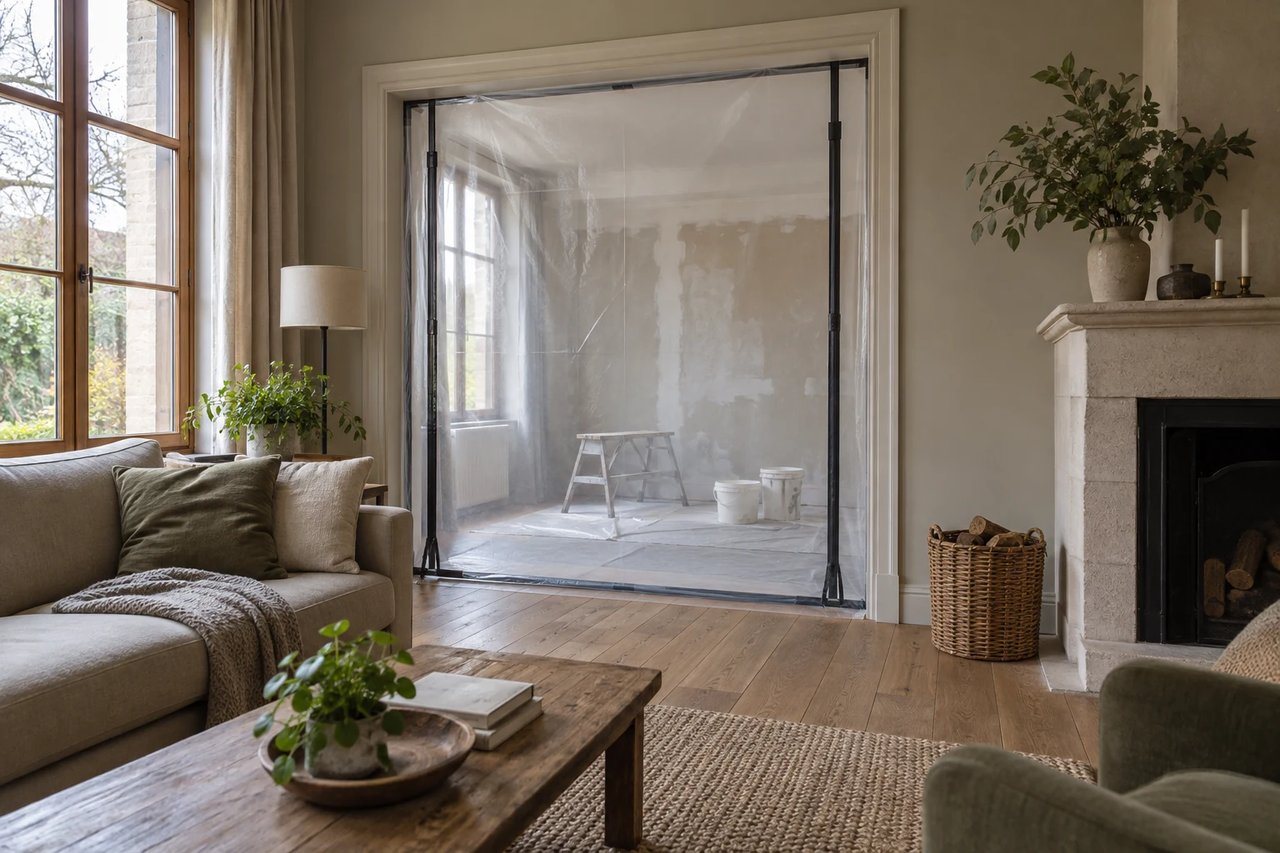
Illustrative example: you live on the ground floor while the upper floor is renovated. Ask what changes when you start using a bedroom again while the bathroom is still being worked on. Submit a revised timetable if there is a delay and have the need for an extension and its cost confirmed.
## Which certificates should you request from professionals?
Ten-year liability insurance addresses a different question from damage during building work. The [Belgian Federal Public Service Economy explains its scope and the certificates to check](https://economie.fgov.be/fr/themes/services-financiers/assurances/construction/assurance-responsabilite). Do not present it as cover for every defect or every accident on site.
Ask the professionals involved for the relevant certificates and have their correspondence with your project checked: company, activity, site and period. Your insurer or broker helps you examine useful cover; the architect carries out the checks falling within their responsibilities.
To compare spending on building work with a planned sale, our guide to [renovating or selling as it stands](https://youhome.immo/journal/renover-ou-vendre-en-letat/) asks a different question from insurance: which works should you commission in your property situation?
## What are the answers to frequently asked questions?
### Is contractors' all risks insurance included in a quotation sufficient?
That alone does not demonstrate that it is. Request the insurance documents and have the insured parties, dates, exclusions and excesses checked for your project.
### Should you say that the house will remain occupied?
Yes, describe the occupied areas and how they will change. Request a written answer about that specific situation rather than general confirmation about the renovation.
### Can you compare insurance by premium alone?
No. Compare scope and limitations first, then the premium, excesses and adjustment costs. A cheaper proposal may meet a different need.
If you are also considering selling your house in the Province of Liège, you can [request your valuation report](https://youhome.immo/en/valuation/request/). Cover for the works still needs to be confirmed with your insurer or broker.
Practical guides
Which insurance should you check before renovating while living at home?
Staying at home during building work? Have cover for the works, retained rooms and occupants clarified before the work begins.