Before installing a gate or moving a driveway, gather the deeds, plans and a precise description of the project. The visible path is not enough to establish everyone's rights. Ask the notary to confirm the origin of the right of way, its terms and the applicable legal framework, particularly for older rights, before starting work.
Book 3 entered into force on 1 September 2021. For rights created before that date, the rules set out below do not apply automatically, even to a change you are considering today: have the transitional rules and the existence of any agreement to the contrary checked. Articles 37 and 39 of the Law of 4 February 2020.
Which documents help you understand the right of way?
Our preparation method compares the documents with the situation on site, without treating observed use as legal certainty:
- The title deed and the deed establishing or acknowledging the easement.
- Attached plans, subsequent agreements and any court judgment.
- A sketch of the route used, photographs and differences from the plans.
An easement is a burden on one property, the servient land, for the benefit of another, the dominant land. Book 3 of the Belgian Civil Code, articles 3.114 to 3.120 defines its sources and terms. The deed, actual exercise of the right and physical layout may inform the analysis. An untraceable document therefore does not prove that no right exists.
Distinguish an easement created by agreement, a statutory right of way for land without adequate access and simple permission tolerated by the owner. Ask the notary what searches are needed if the origin remains uncertain. Fednot's guidance on easements stresses the importance of examining the title before the sales agreement and disclosing known easements when selling.
A statutory right of way for land without adequate access follows special rules set out in articles 3.135 to 3.137. Its determination and relocation are matters for the court under the conditions laid down in those provisions; compensation may be payable. Its termination when it is no longer necessary, and any adjustment or reimbursement of compensation, do not automatically apply to an easement created by agreement. Articles 3.135 to 3.137 of the Civil Code.
What should you compare before installing a gate or moving the route?
Describe the change: route, available width, surface, gate opening and access arrangements for those entitled to use it. Specify the intended uses, without assuming that a right of way allows parking or every type of vehicle.
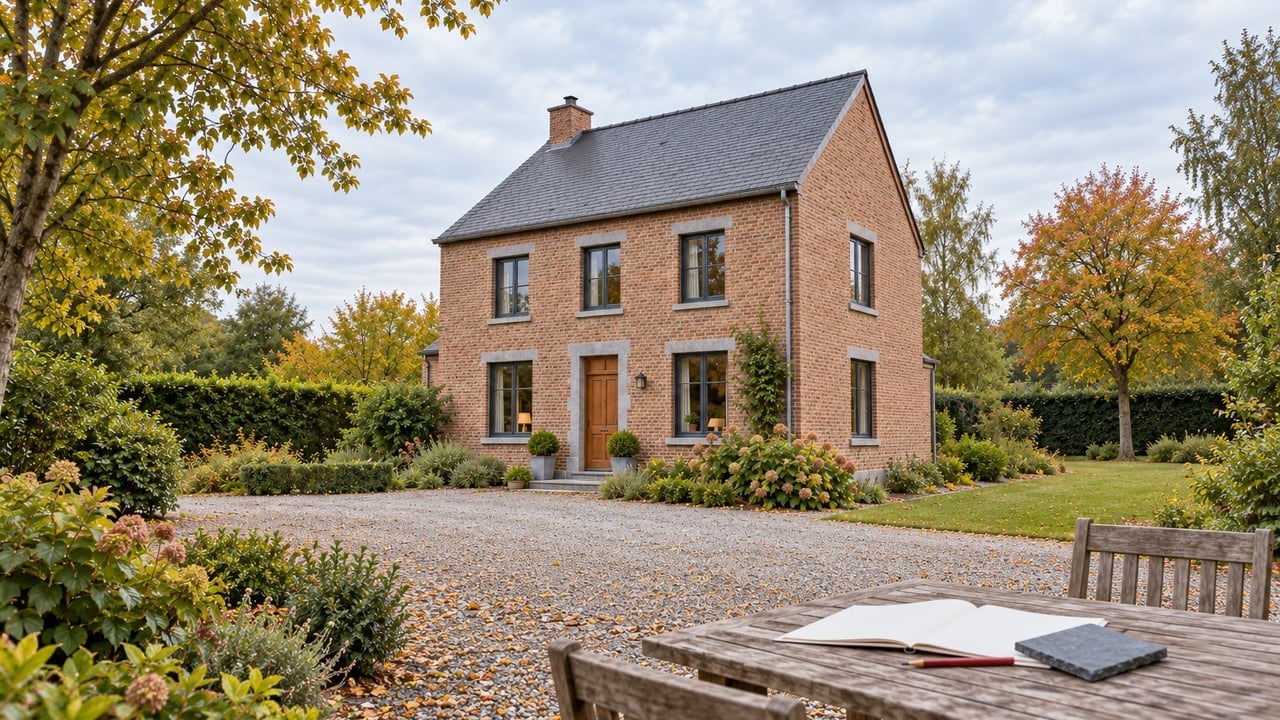
An illustrative example: a driveway serves two houses. Before a gate is installed, the sketch shows its position, opening and the access retained for the other house. This document describes the project; it does not prove its legal feasibility.
Article 3.124 of the Civil Code prohibits the holder of the servient land from reducing the exercise of the easement or making it less convenient. It sets conditions for relocation: an objective interest and an equally convenient alternative on the servient land, at the expense of the person relocating it. This text does not permit you to change the path alone based on your own assessment.
Article 3.125 allows changes reflecting technical and societal developments in the exercise of the right, subject to the parties' intentions and its purpose. Have the actual scope for your project clarified. Separately check with the municipality whether administrative permissions are required.
How can you plan costs and prepare a sale?
Reread the maintenance clauses. Articles 3.1 and 3.121 of the same Code provide default rules: necessary work is borne by the easement holder, except where caused solely by the fault of the holder of the servient land; costs are shared in proportion to the respective benefit when the work serves both properties. An automatic equal split should not be assumed.
Request separate costings for examining the title, any necessary surveyor's measurements and the proposed work. No reliable budget can be given without knowing the file and project.
When selling, distinguish the deeds found, established terms and outstanding questions. Shared access should not be presented as private access for your exclusive use. Our guide to documents for selling a house places these documents within the overall file. To prepare your sale in the Province of Liège, you can request your valuation report. The interpretation of the right of way remains to be confirmed with the notary.
What are the answers to frequently asked questions?
Does an old right of way allow every use?
No. Its origin, documents and conditions of exercise must be examined together. Age alone does not define permitted uses.
Can you close a path that is used less often?
Do not conclude that the right has ended on that observation alone. Have the evidence and applicable legal framework examined before any closure.
Is a verbal agreement enough to move the driveway?
Ask the notary what formalities are required for the proposed change and how it should be taken into account when selling.