# Splitting off part of your garden: how can you check whether it is possible?
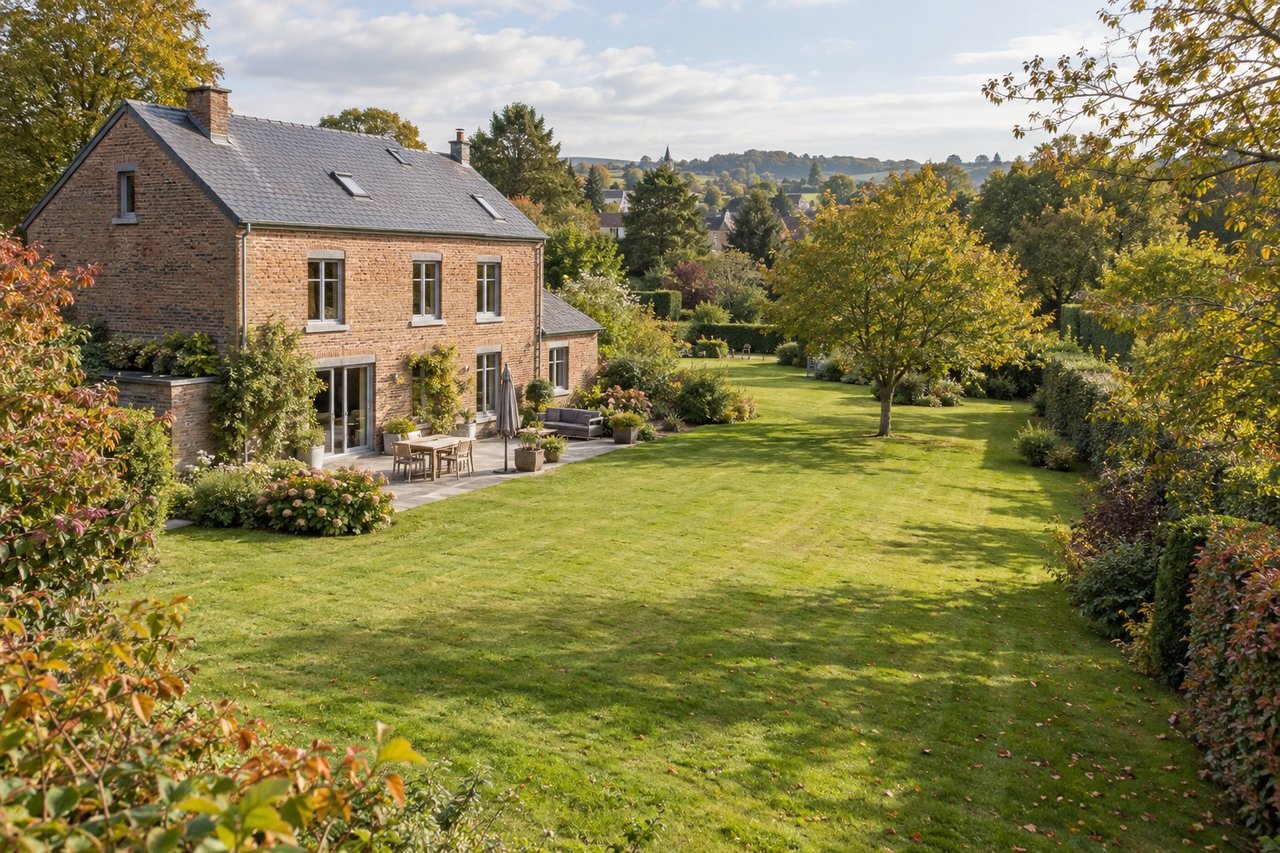
A large garden is not enough to create a building plot. Before selling part of it, have the project examined by the municipality, surveyor and notary, then compare selling the whole property with selling the properties separately. The area split off does not tell you how much privacy, access and amenity the house will retain. This guide concerns French-speaking Wallonia, not the German-speaking Community, Brussels or Flanders.
## What use do you envisage for the land?
Extending a neighbour's garden and creating a plot intended for a house are two different projects. Draw a sketch showing the proposed boundary and what would remain with the house: terrace, parking, access to the garage and passages to the rear. Distinguish dividing ownership from permission to build: one does not establish the other.
Our method is to examine the two future properties together. An access route passing in front of the terrace may change the house's appeal, even if its garden remains large. This is a point to investigate, not an automatic reduction in value.
## Which documents should you gather before consulting the municipality?
Prepare a shared basis for the professionals involved:
- The title deed and documents relating to easements.
- Existing plans, available permissions and the proposed division sketch.
- Access routes, pipes and facilities that might become shared.
- Questions about boundaries, terrain and water management.
Our guide to [documents for selling a house](https://youhome.immo/en/journal/documents-selling-house-belgium/) helps organise the general file. Have the surveyor and notary compare the boundaries and uses observed on site with the rights recorded in the deeds.
## Which formalities need clarification?
Present a concrete project to the planning department. Ask about the applicable rules, permissions required and studies to plan for. [SPW explains the urban development permit](https://www.wallonie.be/fr/demarches/demander-un-permis-durbanisation) for an overall project involving a property to be divided into at least three unbuilt plots intended for residential use, subject to the conditions of the CoDT. This is not a rule allowing every smaller division to be declared free of formalities.
[Article D.IV.102 of the CoDT](https://wallex.wallonie.be/eli/loi-decret/2016/07/20/2016205561-1#852dadea-f135-4e81-b544-5c1cbf958a44) provides, among other things, for prior notification by the notary for certain divisions without an application for an urban development permit where a residential use is involved. Have the nature of your transaction established before settling the sale conditions. Infer neither guaranteed permission to build nor an overall timetable from it.
If an outline proposal warrants an official opinion, ask whether a type 2 planning certificate (certificat d'urbanisme n°2), or CU2, would be useful. [SPW clarifies that the CU2 is not a permit](https://www.wallonie.be/fr/demarches/demander-un-certificat-durbanisme-ndeg2-cu2): it assesses the project but does not authorise its implementation.
## How should you compare the two sale scenarios?
Describe the house and its garden together, then the separate plot and the house with its reduced grounds. For each scenario, examine the uses, views, privacy and buyers it might suit. Obtain separate cost estimates for the surveyor, deeds, studies, access routes and necessary connections. The tax implications also require an assessment tailored to the file.
The expected proceeds from the land are not enough: compare the outcome after costs and the value of the remaining house, without a standard amount or guaranteed additional return. For a property in the Province of Liège, you can [request your valuation report](https://youhome.immo/en/valuation/request/) to frame this commercial comparison. It does not replace the planning or legal assessment.
## What are the answers to frequently asked questions?
### Can a large garden always be divided into a building plot?
No. The area establishes neither the feasibility of the division nor the possibility of building. Present the intended use and a sketch to the municipality before making any promise.
### Can you sell a strip of garden to a neighbour?
The project must be described as such. Have the notary and municipality clarify the applicable formalities; do not automatically apply the conclusions of a building project to it.
### Must you commission all the studies immediately?
Start with the available documents and the municipality's initial responses. Then ask the professionals which investigations and quotations are needed to compare the options, before committing to the corresponding expenditure.
Practical guides
Splitting off part of your garden: how can you check whether it is possible?
A large garden is not automatically a building plot. Check the proposed division and compare its value with that of the house you would retain.