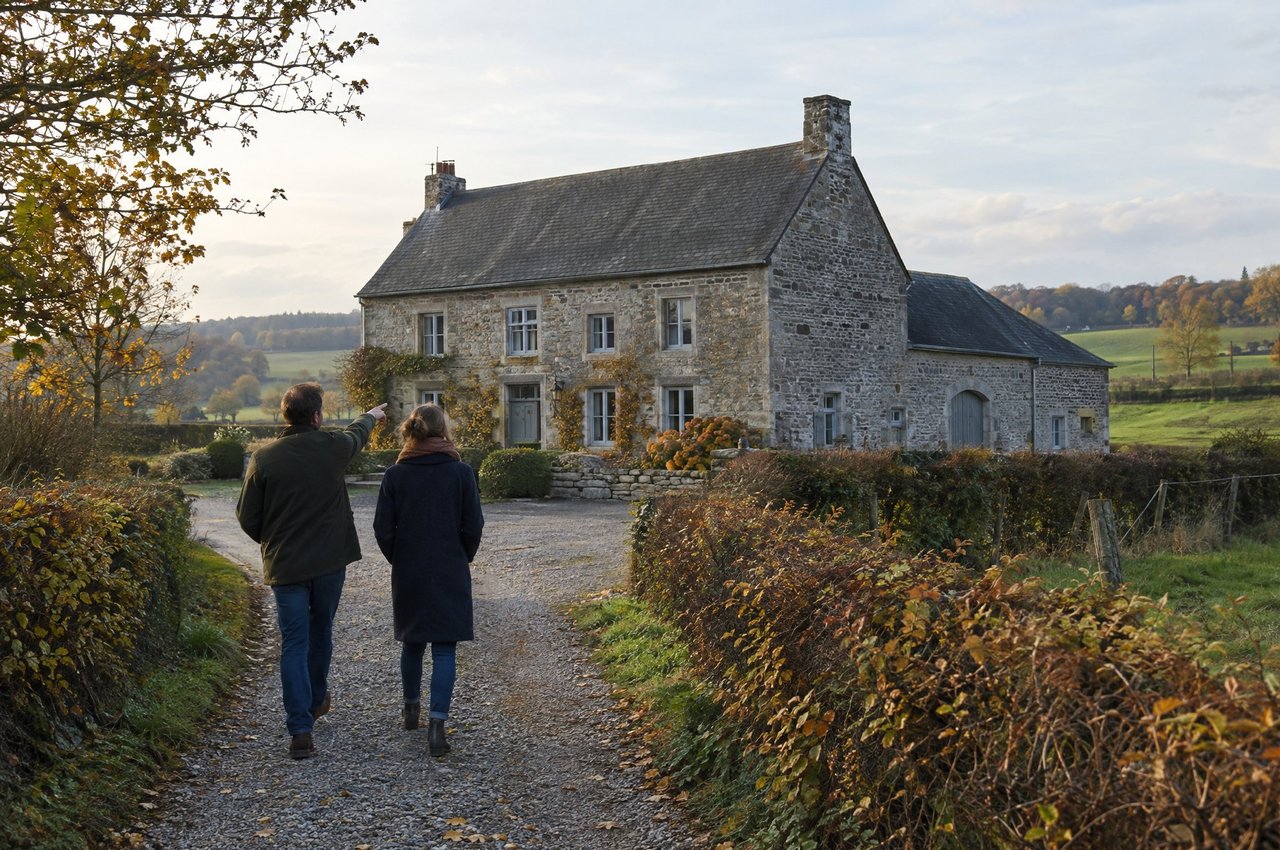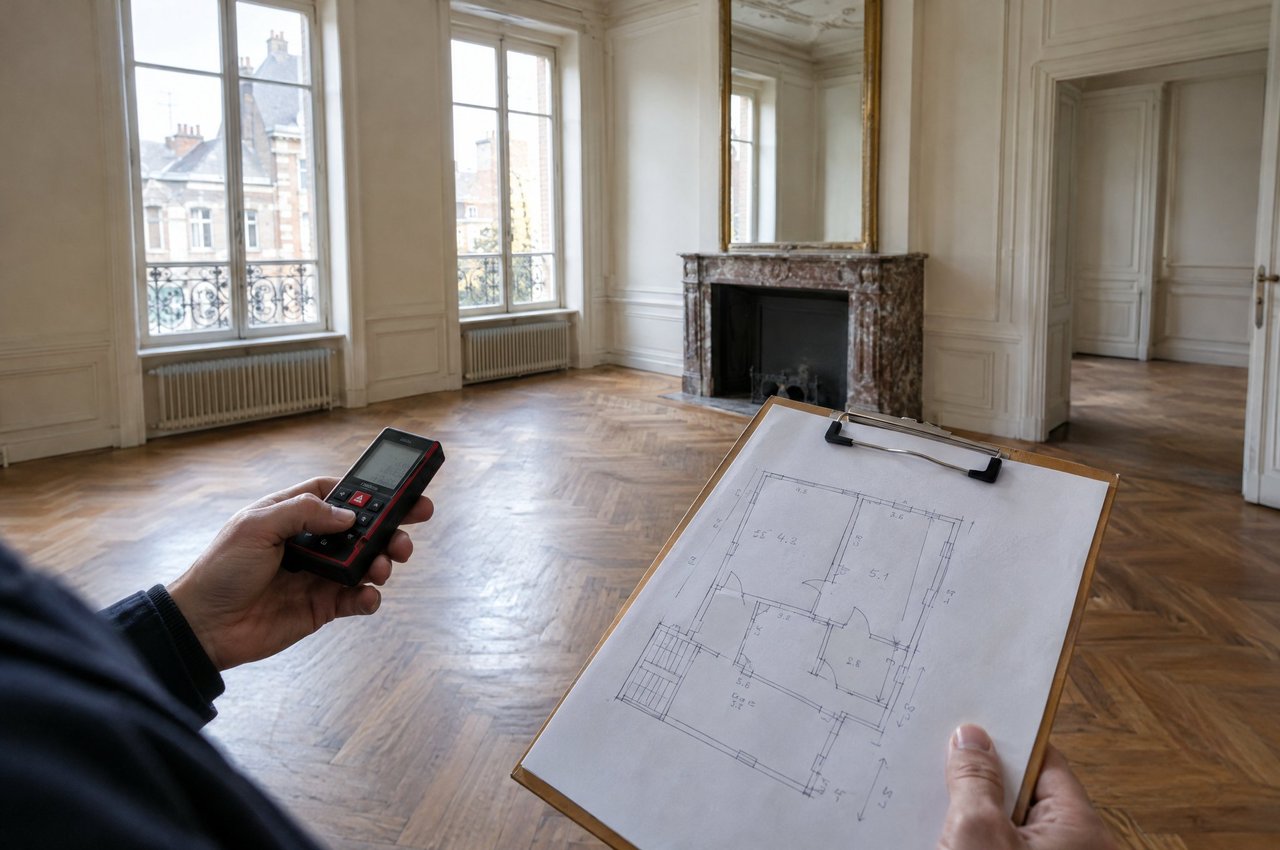
Selling a house is often a major decision in a person's life, usually taken at a personal turning point such as an inheritance, a separation, a job move or a new life plan. Unlike a flat, a family home or a character house carries a particular emotional weight and has technical specifics that strongly influence the sales process. In the provinces of Liège, Namur and Luxembourg, the market for detached and family houses calls for a considered approach, a well-planned timetable and a strategy suited to the type of property. Selling too quickly or unprepared risks leaving money on the table, whereas a structured approach makes it possible to defend the right price calmly in front of qualified buyers.
What sets the sale of a house apart from other properties
Selling a house does not follow quite the same logic as selling a flat or a plot of land. The issues differ considerably.
An often unique property with its own character
A family home, a character house or an unusual property has an architectural identity, a garden, surroundings and a history that make it unique. This singularity is both a strength and a constraint: it attracts a certain buyer profile, but it also calls for careful presentation and precise context. The number of potential buyers is naturally smaller than for a standard property. The challenge is to identify and reach those looking for exactly this type of home.
Unlike a flat in a co-ownership, where service charges and shared management play a central role, the sale of a house focuses on the general condition of the building, the roof, the heating system, the insulation, the state of the garden and planning compliance. These technical elements directly influence perceived value and negotiation.
Specific documents and obligations to anticipate
Essential documents for selling a house in Belgium:
- EPB certificate (Energy Performance of Buildings): mandatory, valid for 10 years
- Certified extract from the soil condition database (BDES): required in Wallonia for every sale
- Planning permission and compliance: proof that the works carried out comply with the rules
- Technical condition report: roof, electrics, heating, damp
- Cadastral plans and an up-to-date title deed
- Municipal regulations and planning requirements where applicable
These documents must be gathered before the property goes on the market. If they are missing or inconsistent, a transaction can stall or a significant price cut can be justified. A serious buyer will always ask for them at the viewing or before the sales agreement is signed. Preparing them in advance shows seriousness and strengthens the seller's credibility.
The weight of emotion in the decision
For many owners, selling their house means leaving a place full of memories: the children's early years, family celebrations, projects completed over time. This emotional dimension can affect the timetable, price expectations and the ability to negotiate calmly. It is essential to distinguish sentimental value from market value. The sale price is built on objective criteria: location, size, condition, fittings, surroundings, and local supply and demand.
Some sellers turn down sound offers because they are hoping for a buyer who will "understand" the house as they do. This stance, though understandable, can keep the property on the market for a long time and, paradoxically, lead to a later sale at a lower price. The right approach is to prepare mentally for the sale, clarify your priorities (timescale, price, terms) and enlist a neutral third party able to guide the negotiation.
An accurate, consistent valuation: the starting point of a successful sale
The valuation is the cornerstone of any house sale. A price that is too high leaves the property stagnating, costs credibility on the market and often leads to a late price cut that weakens the seller's position. A price that is too low loses money unnecessarily. The right price lies within a narrow range that reflects both the characteristics of the property and the reality of the local market.
The criteria that influence the price of a house
| Criterion | Effect on price | Notes |
|---|---|---|
| Location | Very high | Proximity to amenities, schools, transport |
| Living area and plot | High | An important ratio in rural or suburban areas |
| General condition and works | High | Roof, heating and insulation weigh heavily |
| Energy performance | Growing | EPB rating increasingly scrutinised by buyers |
| Character and authenticity | Variable | Strong for character properties, none for standard houses |
| Planning and possible extensions | Medium to high | Potential to extend is valued |
A serious valuation is never limited to a simple online comparison. It involves a detailed on-site visit, an analysis of recent sales of similar properties in the area, consideration of the property's specific features (orientation, view, any nuisances, access) and thought about the buyer profile likely to be interested. The property valuation must result in a price that is defensible, reasoned and realistic.
Common valuation mistakes
Many owners start by consulting online platforms or automated valuation tools. These tools give a wide, often unreliable range, because they do not take into account the property's particular features or local dynamics. In Wallonia, the property market varies greatly between a semi-rural municipality in the Province of Luxembourg, a mid-sized city such as Namur and the area around Liège. A character house in a sought-after village does not sell at the same price or with the same strategy as a modern villa on a housing estate.
Common mistakes to avoid:
- Relying solely on the indexed purchase price
- Copying the neighbour's asking price without knowing the context of their sale
- Overestimating the value of works carried out without considering buyers' tastes
- Ignoring the effect of poor energy performance
- Overlooking the real condition of the building (damp, roof, electrics)
Each of these mistakes leads to an unsuitable starting price, which lengthens the timescale and weakens the negotiation. A seller who corrects their price after three months of stagnation sends a negative signal to the market.
Preparing the house to maximise its perceived value
Once the price is set, the next step is to prepare the property for the market. This phase is often underestimated, even though it directly shapes visitors' first impressions and therefore the speed of the sale and the final price.
Decluttering, tidying and neutralising
Buyers need to be able to picture themselves in the house. That means removing overly personal items (family photos, collections, very personal decorations), decluttering rooms to show their true volumes and carefully tidying every space. An overloaded garage, a messy loft or a poorly kept garden give the impression that the house has been neglected. These small details weigh heavily in the intuitive assessment a visitor makes in a few minutes.
Neutralising also means depersonalising the decor to broaden the property's appeal. A brightly coloured child's bedroom can become a neutral study, and a bathroom with very specific accessories can be pared back. The aim is not to turn the house into a showroom, but to let everyone imagine their own life plan in it.
The small repairs that change everything
Before putting a house on the market, it is wise to carry out certain minor repairs that clearly improve how the property is perceived without major expense. A dripping tap, a creaking door, blackened tile grout, damaged sockets, flaking paint in the hallway: all these details create an impression of neglect that invites the buyer to negotiate the price down.
Small works with a big impact:
- Refreshing the paintwork in the main living areas
- Cleaning or replacing the bathroom seals
- Repairing small cracks and visible imperfections
- Tending the garden, trimming hedges, weeding paths
- Checking that all openings work properly (doors, windows, shutters)
- Ensuring adequate lighting in every room
These steps represent a limited investment but noticeably increase the property's appeal. They reassure buyers about its general condition and reduce the arguments for negotiating the price down.
Choosing the right way to sell: alone, with an agency or tailored support
A house can be sold in several ways. Each option has advantages and drawbacks depending on the seller's profile, the type of property and timetable constraints.
Selling alone: autonomy, but a big time commitment
Some owners choose to sell without an intermediary to save the agency commission. This is perfectly possible, but it requires time, property marketing skills, good knowledge of the local market and the availability to handle viewings, follow-ups and negotiations. You also need to master the legal aspects, write an effective listing, take quality photos and advertise the property on the right platforms.
The main risks of a private sale are underpricing (out of caution), difficulty qualifying visitors (time wasted on the merely curious), an emotional negotiation that is hard to manage alone and, sometimes, lost time that proves costly if the property stays on the market too long. This method suits mainly very sought-after, easily accessible properties and experienced sellers who know the process.
Support from a specialist agency
Using a professional estate agency offers several structural advantages. A serious agency brings a reliable valuation, strategic marketing, a network of qualified buyers, professional management of viewings and a neutral, effective negotiating capacity. The seller delegates the logistics, follow-ups and coordination with the notaries, while keeping control of the decisions.
When selling a character, unusual or prestige house, the agency plays a key role in targeting buyers. It knows how to showcase the property's specific strengths, tell its story and create a quality visual presentation. Full sales support makes it possible to sell with clarity, confidence and peace of mind, avoiding the classic mistakes that weaken the price or lengthen the timescale.
| Criterion | Selling alone | With a specialist agency |
|---|---|---|
| Direct cost | No commission | Commission (varies with the service) |
| Time invested | Very high | Low |
| Quality of the valuation | Variable (risk of under or overvaluation) | Professional and reasoned |
| Visitor qualification | Difficult without experience | Filtered in advance |
| Negotiation | Emotional and direct | Neutral and strategic |
| Showcasing the property | Depends on the seller's skills | Optimised (photos, copy, distribution) |
| Buyer network | Limited to public platforms | Wider (client base, professional network) |
The choice depends on the seller's profile, the complexity of the property and the priorities (timescale, price, peace of mind). For a demanding property or a period of transition, professional support often brings decisive security and efficiency.
Defining a suitable marketing strategy
Putting a house on the market is not just a matter of posting a listing on a classified ads site. A successful house sale rests on a clear strategy covering the timetable, buyer targeting, the quality of the presentation and the management of viewings.
The right time to launch the sale
The Belgian property market has seasonal variations. Traditionally, the most active periods are spring (March-May) and early autumn (September-October). Buyers are more numerous and more motivated, and gardens look their best. Avoiding launching a sale in high summer (holidays) or the depths of winter (festive season, poor light) can noticeably improve results.
That said, every property and every situation has its own logic. A seller bound by a professional or personal timetable cannot always choose the ideal moment. In that case, careful preparation and a strengthened presentation strategy partly make up for the less favourable context.
Visual presentation and storytelling
The first seconds of an online listing are decisive. Buyers scroll quickly and stop only at properties that appeal to them visually. Professional, bright, well-framed photos in sufficient number (15 to 25 for a house) are essential. They should show each main room, the garden, the exterior, the character details (fireplace, parquet, mouldings) and the immediate surroundings.
The listing copy should tell the story of the house, convey its atmosphere and highlight its strengths in a concrete, sincere way. Avoid empty sales jargon and favour facts: living area, number of bedrooms, energy performance, recent works, proximity to amenities. Good storytelling helps buyers picture themselves there and creates a positive emotional connection.
Targeted distribution and buyer selection
Publishing a listing on every available platform is not always the best strategy, especially for a character or prestige property. Overly wide distribution attracts unqualified visitors, which wastes time and can undermine the confidentiality of the sale. For some properties, a more discreet, targeted and controlled approach gives better results.
Selecting visitors in advance (a phone call, checking purchasing capacity, understanding the profile sought) makes it possible to focus efforts on serious buyers and avoid pointless viewings. Each viewing should be prepared, accompanied and followed by a debrief so that the presentation or message can be adjusted if necessary.
Managing viewings, negotiating and signing the sales agreement
Once viewings are under way, the negotiation phase begins. It is a delicate moment that calls for calm, method and the ability to defend the price without excessive rigidity.
Organising effective, professional viewings
Each viewing should take place in the best possible conditions. The house must be clean, tidy, well lit (shutters open, lights on if needed) and aired. The seller can be present or absent depending on the strategy chosen, but in any case should never be defensive or too insistent. The buyer must be able to move around freely, ask questions and imagine their future life there.
Key points for a successful viewing:
- Prepare a complete file (EPB, plans, invoices for works, planning regulations)
- Explain the strengths of the property and its surroundings clearly
- Answer technical questions honestly (heating, insulation, roof)
- Do not hide obvious defects (they will be discovered anyway)
- Let the buyer picture themselves there without sales pressure
A badly handled viewing can drive away a serious buyer. A well-conducted viewing creates a climate of trust and eases the rest of the process.
Negotiating calmly and defending the right price
Negotiation is an integral part of selling property in Belgium. Few buyers accept the asking price without discussion. The challenge is to distinguish a legitimate negotiation, based on objective arguments (works needed, local market, financing), from an opportunistic attempt to lower the price without good reason.
A price that is accurately valued from the outset makes negotiation much easier. The seller can explain how the price was built, show the market comparisons and stand firm on the essentials while accepting a reasonable negotiating margin. Giving way too quickly or too far signals weakness and can make the buyer doubt the property's real value.
Conversely, refusing any negotiation can block the sale. The right stance is to listen, understand the buyer's motivations, check their financing capacity (mortgage offer, own funds) and adjust if necessary within an acceptable range. The presence of a professional third party eases this step by depersonalising the exchanges and keeping the approach rational.
From sales agreement to deed of sale: securing the transaction
Once agreement has been reached on price and terms, the parties sign a sales agreement (compromis) or an accepted purchase offer. This document is legally binding on seller and buyer. It sets the price, the conditions precedent (obtaining the loan, no serious planning encumbrances), the deadline for signing before the notary and the payment terms.
The sales agreement must be drafted with care, ideally with the help of a professional or a notary. It protects both parties and avoids unpleasant surprises. After signing, the buyer generally has a few weeks to obtain their mortgage. The seller, for their part, must gather all the documents needed to sign the deed of sale.
The deed of sale is signed before the notary, generally 2 to 3 months after the sales agreement. At that point the sale becomes final, payment is made and the keys are handed over. The notary checks that all documents are in order, clears any mortgages and has the new owner entered in the land registry. To understand the legal stages of this process, it can be useful to consult specialist resources on property sales under French law, even though Belgian law has its own particularities.
Selling and buying again: managing the transition between two properties
Many owners sell their current house in order to buy another. This situation, common when moving, when a family grows or at retirement, calls for fine coordination between two separate but interdependent transactions.
The risks of a double timetable
Selling before finding the next property carries the risk of having to leave your house with no immediate housing solution. That can mean renting temporarily, putting furniture into storage and enduring considerable logistical stress. Conversely, buying before selling can lead to double financing (two loans in parallel, two EPB certificates, two sets of charges), which is not always financially possible or accepted by banks.
Strategies to secure the transition:
- Include a condition precedent of sale in the purchase agreement
- Negotiate a longer signing deadline to allow time to sell
- Arrange a bridging loan if your financial profile allows
- Rent temporarily while waiting to find the right property
- Sell first with a negotiated vacating date (2 to 3 months after signing)
Each solution has advantages and limits. The essential thing is to clarify your priorities (timescale, financial security, choice of the new property) and to have support in coordinating the two transactions without improvisation.
The role of financing in the coordination
The bank plays a central role in this double transaction. It assesses borrowing capacity on the basis of income, outgoings and the value of the properties. If the seller still has a loan outstanding on their current house, the bank will check that the sale will repay that loan and free up sufficient own funds for the new purchase.
It is advisable to meet your bank adviser at the very start of the project to clarify the financing terms, the amount you can borrow, the rates and the timescales. This forward planning avoids unpleasant surprises and makes it possible to set a realistic sale price that takes the financing needs for the next step into account. For those who want to explore their financing options, making a loan application can prove useful.
Tax and costs linked to selling a house
Selling a house involves costs and, in some cases, tax obligations. It is important to anticipate them to avoid surprises and calculate the net proceeds of the sale correctly.
Costs borne by the seller
Unlike a purchase, where notary's costs and registration duties weigh heavily, selling a house in Belgium involves relatively few direct costs for the seller. The main items are:
- EPB certificate: between 150 and 300 euros depending on the complexity of the property
- Certified extract from the soil condition database (BDES): 30 euros per plot
- Agency commission: varies with the mandate and the service (generally 3 to 5% of the sale price, excluding VAT)
- Mortgage release costs: if a loan is still outstanding, allow for notarial costs to lift the mortgage
- Compliance or presentation works: varies with the condition of the property
These costs must be factored into the calculation of the net proceeds, especially if the proceeds will finance a new purchase or repay a loan.
Possible taxation of capital gains
In Belgium, the sale of a main residence is generally exempt from capital gains tax, provided the seller actually lived there. However, if the house was let, if it is a second home, or if the sale takes place shortly after the purchase (speculation), specific rules apply and may lead to taxation.
It is advisable to consult a notary or a tax adviser before the sale to check your personal situation and avoid any unpleasant surprise. Tax rules change regularly and vary between regions (Wallonia, Flanders, Brussels).
Avoiding the classic pitfalls and mistakes when selling a house
Even a well-prepared sale can run into obstacles. Knowing the common mistakes makes it possible to anticipate and avoid them.
Overpricing the property and getting stuck
The most common mistake is setting a price that is too high from the outset, out of optimism, emotional attachment or lack of market knowledge. An overpriced property stays on the market for a long time, loses credibility and often ends up selling below its real value after several successive price cuts. Serious buyers actively compare the properties available and quickly spot those that are out of line with the market.
Neglecting preparation and presentation
Selling a house "as is", without cleaning, minor repairs or visual presentation, considerably reduces its appeal. Buyers form their first impression in a few seconds, often from the online photos. A poorly presented property will not prompt a viewing, or will attract only curious visitors who do not follow up.
Accepting any visitor without qualification
Arranging viewings every day without checking visitors' profiles wastes time and creates the impression of a property being sold off cheaply. Some visitors are simply curious, others have no financing capacity, others still are looking for a completely different property. Qualifying enquiries in advance (a few simple questions by phone or email) makes it possible to filter and focus efforts on buyers who are genuinely interested and solvent.
Handling an emotional negotiation alone
Negotiating directly with a buyer who criticises your house, highlights its defects and offers less than your price can become emotionally difficult. Many sellers take the remarks personally and react either by rejection (refusing to negotiate) or by capitulation (quickly accepting a price that is too low). The presence of a neutral third party keeps the discussion rational and achieves a better result.
Outlook and trends in the Walloon property market in 2026
The property market in Wallonia, and particularly in the provinces of Liège, Namur and Luxembourg, is undergoing structural changes that affect the sale of houses. Understanding these trends helps refine your strategy and anticipate buyers' expectations.
Growing attention to energy performance
For several years, the energy performance of buildings has weighed ever more heavily in buying decisions. Buyers are increasingly well informed about heating costs, necessary insulation works and future obligations (a ban on letting the least efficient properties, renovation standards). An EPB F or G rating can be a serious obstacle to a sale, especially if buyers anticipate costly works.
To maximise the chances of selling at the right price, it may be wise to carry out certain energy improvements before going on the market (roof insulation, a new boiler, double glazing). These investments are generally well rewarded and reassure buyers about future costs.
The search for character and authenticity
Alongside the energy question, there is sustained demand for character homes, unusual properties and homes offering a pleasant setting, a garden, peace and quiet and a certain authenticity. Buyers, particularly families and people working from home, are looking for functional spaces, generous volumes and a quality environment.
This trend benefits well-located houses in sought-after villages, carefully renovated older homes and properties with potential for alterations. Conversely, standard houses without character, poorly located or in need of major works can struggle to find a buyer, even at a reduced price.
Digitalisation and the quality of online presentation
Most property searches begin online. Buyers look at dozens of listings before selecting a few properties to view. The quality of the digital presentation (photos, copy, video, virtual tour) has become a key success factor. Agencies and sellers who invest in careful presentation capture more attention and generate more qualified viewings.
Online platforms, such as those presenting property-for-sale listings, illustrate how important it is to stand out in a competitive market. To explore the properties currently on offer, you can browse the properties for sale available.
The importance of structured, personal support
Given the growing complexity of the market, the diversity of buyer profiles and the significant financial stakes, professional support comes fully into its own. Selling a character or prestige house calls for a tailored approach, in-depth knowledge of the local market and the ability to showcase the property's specific strengths.
Structured support is not limited to posting a listing and arranging viewings. It begins with a reasoned valuation and continues with a suitable marketing strategy, rigorous buyer selection, controlled negotiation and full follow-up through to signing before the notary. This method brings peace of mind, saves time and often achieves a better sale price.
For owners in transition (an inheritance, a separation, a job move), this securing of the process is all the more valuable. It allows them to focus on their life plans without the stress of a badly managed sale or a difficult negotiation.
Selling a house in Wallonia requires method, preparation and a thorough understanding of what the local market expects. Whether you own a character home, a family house or a prestige property in the provinces of Liège, Namur or Luxembourg, the challenge remains the same: defend the right price, attract qualified buyers and complete the transaction under the best conditions. YOUHOME supports you with a clear, tailored approach so that you can sell with peace of mind, without improvisation or unnecessary stress.